Welcome to the weird and wonderful world of record covers from the golden age of LPs

Subscribe to feed

Blues

You are currently browsing the archive for the Blues category.

Shakey’s blues

“GOOD TIMES” The vocal & harmonica blues of SHAKEY JAKE (Harris) with Jack McDuff on the B3 and Bill Jennings on guitar. No bass or drums on the session. Recorded at Rudy Van Gelder’s legendary Englewood Cliffs studio and released on Prestige/Bluesville. (1960) Featuring Worried Blues; My Foolish Heart, (a take on Muddy Water’s Mannish Boy); Sunset Blues; etc.

1 Star2 Stars3 Stars4 Stars5 Stars (12 votes, average: 3.17 out of 5)
Loading ... Loading ...

Blues and Haikus

_1239.JPG

42.JPG

Jack Kerouac with jazz greats Zoot Sims and Al Cohn. (1958). His second album on Hanover after “Poems for a Beat Generation” on which he was accompanied by TV talk show host Steve Allen. Produced by Bob Thiele. Click on the back cover here and hopefully you can read the liner notes by Gilbert Millstein. Kerouac calls Zoot and Al “Holy Blakean babies” and says “Zoot and Al blow thoughtful, sweet metaphysical sorrows.” Kerouac actually sings on one cut with Zoot playing piano for the first time on record. Here’s one of the haikus: “In my winter cabinet/the fly has/died of old age” Beat that.

Track listing: American Haikus; Hard Hearted Old Farmer; The Last Hotel & Some Of The Dharma; Poems from the Unpublished Book of The Blues; Old Western Movies; Conclusion Of The Railroad Earth.

Hear some of this record HERE.

1 Star2 Stars3 Stars4 Stars5 Stars (28 votes, average: 4.71 out of 5)
Loading ... Loading ...

Grazin’ in the grass

img_1229.JPG

Swedish blues band Peps & Blues Quality “Sweet Mary Jane”  (1969)

1 Star2 Stars3 Stars4 Stars5 Stars (31 votes, average: 4.71 out of 5)
Loading ... Loading ...

Snatch and the Poontangs

img_0983.JPG

img_0985.JPG

“For Adults Only” Kent Records, 1969. This is actually a raunchy blues album by Johnny Otis and his son guitarist Shuggie “Inspiration Information” Otis, (thirteen at the time), and vocalist Delmar “Mighty Mouth” Evans under assumed names. The cover looks like R. Crumb, but I read somewhere that Johnny Otis did it (?). This album was “Rated X” and sold in Adult Bookstores.

After “Signifyin’ Monkey,” (which also opens the classic Otis blues LP “Cold Shot”), “Snatch” continues with other examples of classic toasts “Poolshootin Monkey,” (here as “Signifyin Monkey part 2″) and “Hey, Shine” (a Bo Diddley beat with the melody of Otis’ own “Willie and the Hand Jive,) and “Stack a Lee”. “Dirty Dozens” (aka “Yass Yass Yass”) is a classic.

1 Star2 Stars3 Stars4 Stars5 Stars (30 votes, average: 3.67 out of 5)
Loading ... Loading ...

Younger stud

img_0343.JPG

“L’incroyable!”

1 Star2 Stars3 Stars4 Stars5 Stars (3 votes, average: 2.33 out of 5)
Loading ... Loading ...

Lightnin’ Sam Hopkins

lighthnin-sam-hopkins.jpg

“Hi from France! A rare LP of raw blues on Arhoolie records “¦ by the late Great Lightnin’Sam Hopkins”  -Alain Mallaret

1 Star2 Stars3 Stars4 Stars5 Stars (9 votes, average: 4.56 out of 5)
Loading ... Loading ...
Lightnin’ strikes

lightnin-hopkins.jpg

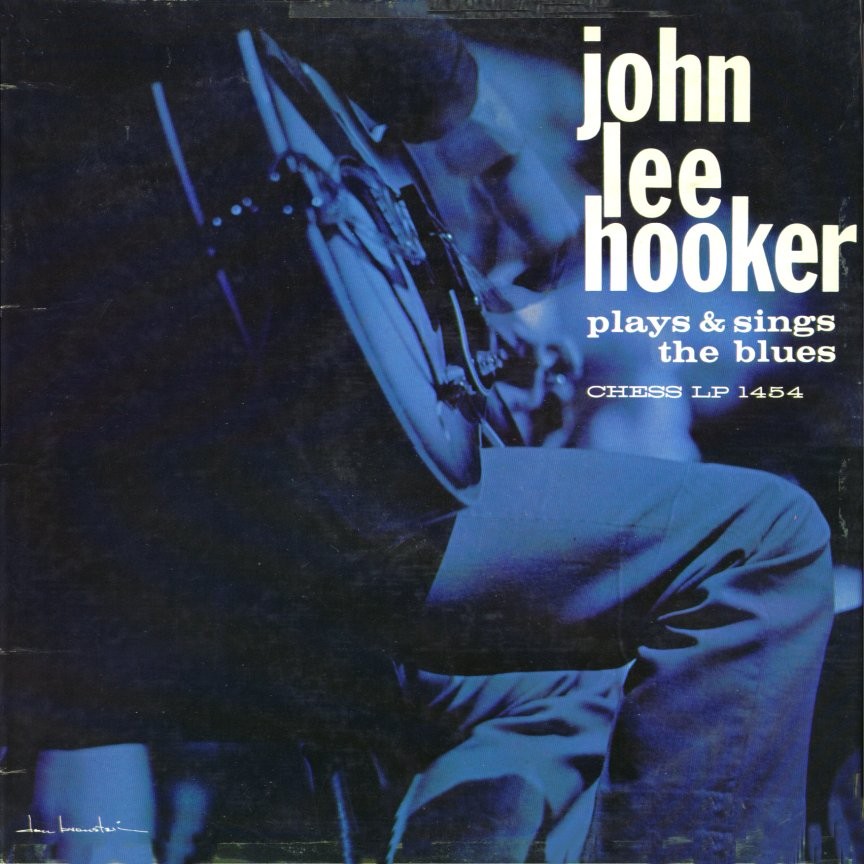
“I guess it’s about 35 years ago when one afternoon I found this jewel in my hometown’s only record store. It’s the original from 1959, the shop’s owner looked happy to sell it, as I remember. It must have been there on his shelf since that time, ignored by everyone. As I was very young I’d never heard the name “Lightnin’ Hopkins” before and I only took a look at the Blues records ’cause there were these older guys hanging around the Jazz and Classical records giving me no chance at all. I loved the cover from the first sight and the music astonished me. I took the record home and it’s still one of my favorites after all these years and thousands of LPs that came after it.” — K. Reineke, Germany

1 Star2 Stars3 Stars4 Stars5 Stars (7 votes, average: 3.29 out of 5)
Loading ... Loading ...
Country roads

img_4188.JPG

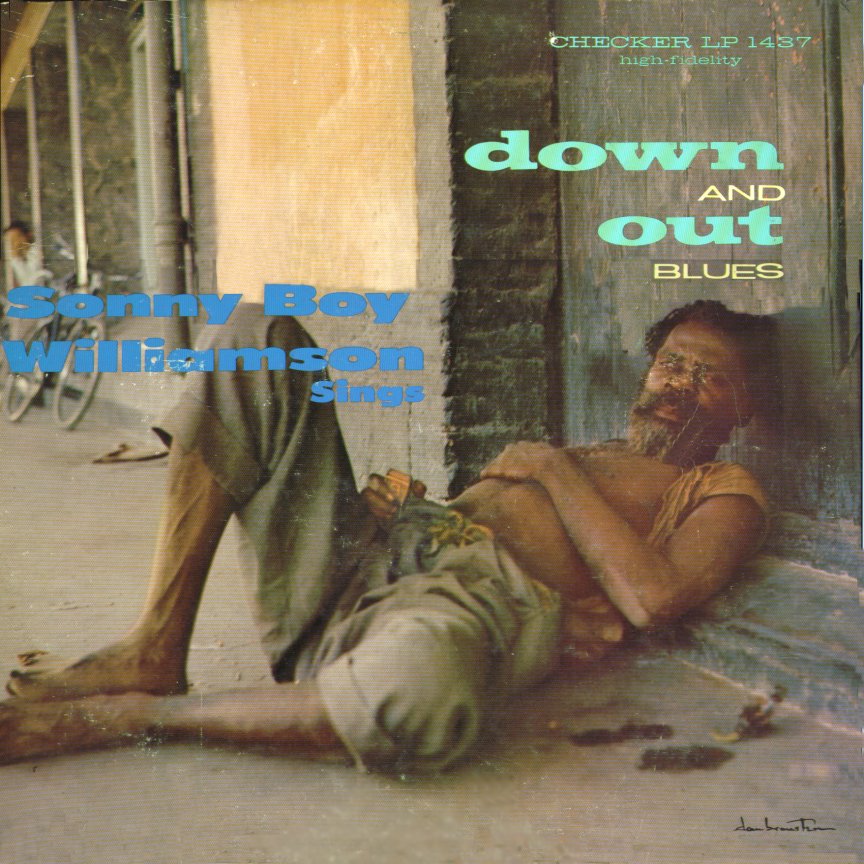
“Blues & Ballads” Lonnie Johnson with Elmer Snowden  Prestige/Bluesville (1960)

This beautiful album was engineered by Rudy Van Gelder in his Englewood Cliffs, New Jersey, home studio where so much jazz history was made. It features guitar innovators Lonnie Johnson and Elmer Snowden together for the first time–despite a friendship going back to the 1920s when both appeared on some of the earliest jazz and blues 78s. Johnson, the father of single-note six-string soloing, is in marvelous voice on this selection of blues, ballads, and jazz, crooning the double-entendre “Jelly Roll Baker” and the heartache-laden “Back Water Blues” (a Bessie Smith tune he first cut in 1927) with a marksman’s sense of pitch and chilling nuance. Snowden serves mostly as accompanist. But these men play so closely that they seem to be sharing every breath. –Ted Drozdowski

1 Star2 Stars3 Stars4 Stars5 Stars (7 votes, average: 3.86 out of 5)
Loading ... Loading ...
300 lbs of joy

img_4186.JPG

Howlin’ Wolf – “The Real Folk Blues” Recorded in Chicago, Illinois between 1956 & 1965. (In the mid-’60s, Chess Records released a great series of compilations by some of its best blues artists, all of them called THE REAL FOLK BLUES) “Killing Floor,” “Built for Comfort”,”Three Hundred Pounds of Joy”, “Natchez Burning,” “Tail Dragger” and more.

Personnel: Howlin’ Wolf (vocals, guitar, harmonica); Hubert Sumlin*, Willie Johnson, Otis “Smokey” Smothers, Jody Williams (guitar); J.T. Brown (tenor saxophone); Donald Hankins (baritone saxophone); Johnny Jones, Lafayette Leake, Hosea Lee Kennard (piano); Willie Dixon, Buddy Guy, Andrew Palmer (bass); Sammy Lay, Earl Phillips, Junior Blackman (drums).

“Howlin’ Wolf ranks among the most electrifying performers in blues history, as well as one of its greatest characters. He was a ferocious, full-bodied singer whose gruff, rasping vocals embodied the blues at its most unbridled. A large man who stood more than six feet tall and weighed nearly 300 pounds, Howlin’ Wolf cut an imposing figure, which he utilized to maximum effect when performing. Howlin’ Wolf cut his greatest work in the Fifties for the Chicago-based Chess Records. Many songs with which he is most closely identified – “Spoonful,” “Back Door Man,” “Little Red Rooster” and “I Ain’t Superstitious” – were written for him by bluesmen Willie Dixon, a fixture at Chess Records who also funneled material to Wolf’s main rival, Muddy Waters. Howlin’ Wolf himself was an estimable songwriter, responsible for such raw classics as “Killing Floor,” “Smokestack Lightning” and “Moanin’ at Midnight.”

In 1910, Howlin’ Wolf was born on a Mississippi plantation in the midst of a blues tradition so vital it remains the underpinning for much of today’s popular music. His birth name was Chester Arthur Burnett; “Howlin’ Wolf” was a nickname he picked up in his youth. He was exposed to the blues from an early age through such performers as Charley Patton and Willie Brown, who performed at plantation picnics and juke joints. Wolf derived his trademark howl from the “blue yodel” of country singer Jimmy Rodgers whom he admired. Although he sang the blues locally, it wasn’t until he moved to West Memphis in 1948 that he put together a full-time band. Producer Sam Phillips recorded Howlin’ Wolf at his Memphis Recording Service (later Sun Records) after hearing him perform on radio station KWEM. Some of the material was leased to Chess Records, and in the early Fifties Howlin’ Wolf signed with Chess and moved to Chicago. He remained there until his death. (The Rock and Roll Hall of Fame)

*On a personal note, I just saw Hubert Sumlin playing an all Howlin’ Wolf set with a group including David Johansen and James Blood Ulmer – it killed!

1 Star2 Stars3 Stars4 Stars5 Stars (11 votes, average: 4.55 out of 5)
Loading ... Loading ...

Champion of the Blues

img_4263.JPG

Champion Jack Dupree. Atlantic Records. 1961.

1 Star2 Stars3 Stars4 Stars5 Stars (4 votes, average: 2.75 out of 5)
Loading ... Loading ...