“The Playboy Farmer” Lonnie “Pap” Wilson on Starday. “Jokes, Laffs, Songs & Gags about the Funny Side of Life Or How to Have Fun - Even if You’re Married“
You are currently browsing the archive for the Country category.
Honky Tonk and Western Swing star Hank Thompson “Songs for Rounders” Capitol Records. (1959)
From 1957, The Wilburn Brothers Teddy and Doyle on Decca. Including That’s When I Miss You / Cry Cry Darling / I Know You Don’t Love Me Anymore / Always Alone / You Win Again / I’ll Sail My Ship Alone / Don’t Sweetheart Me / Time Changes Everything / If It’s Wrong To Love You / One Has My Name / You Can’t Break The Chains Of Love / Much Too Often.
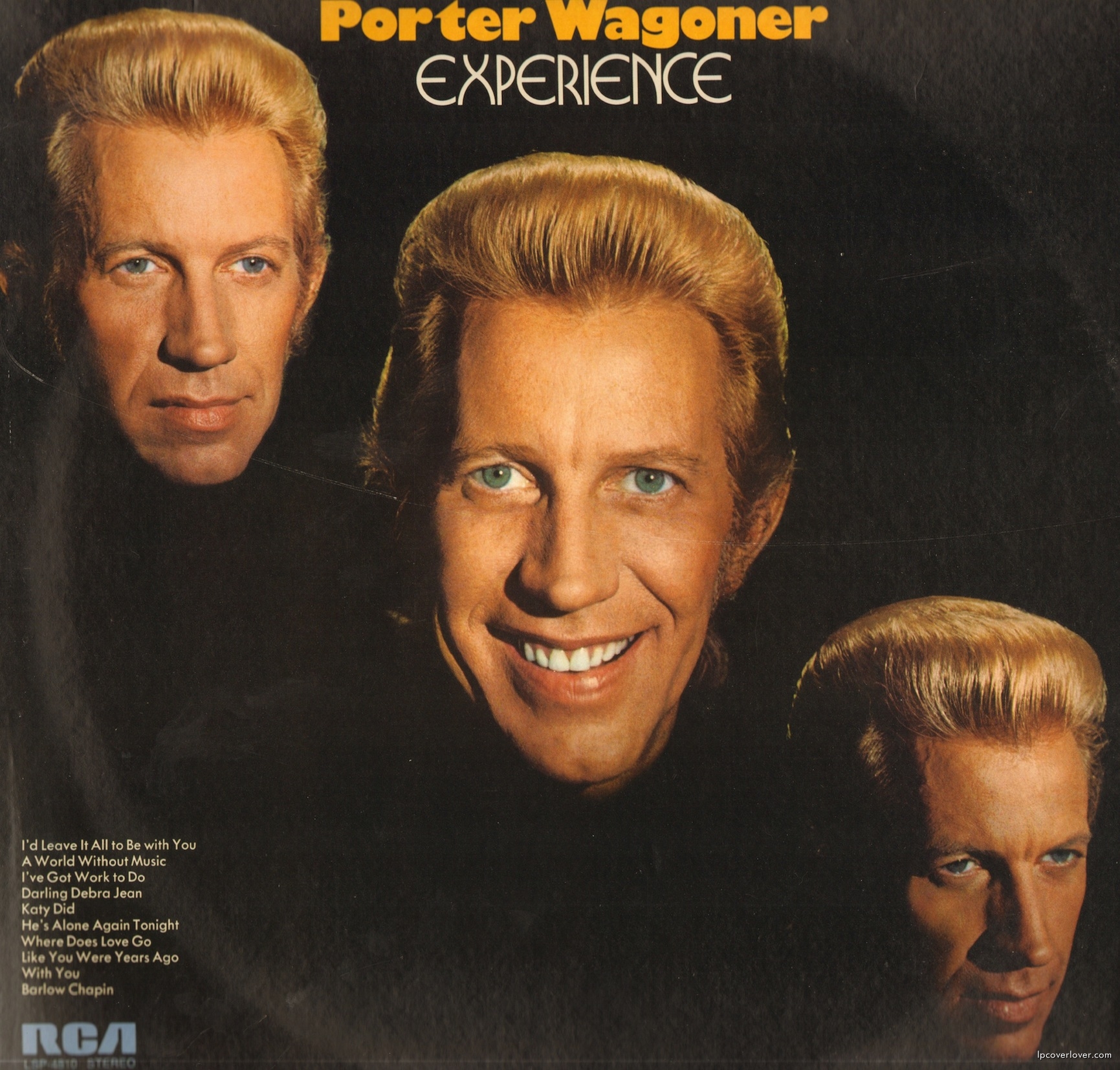
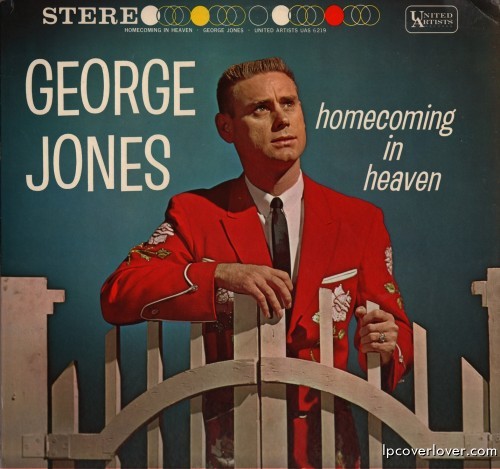
This cover shows an early example of the “Nudie Suit”, which was the creation of mandelin player turned tailor “Nudie” Cohn. Among Nudie’s most famous creations is Elvis Presley’s $10,000 gold lame suit seen on the cover of his “50,000,000 Elvis Fans Can’t Be Wrong” lp. Nudie also designed Hank William’s white cowboy suit featuring musical notation on the sleeves (like this one above) and Gram Parson’s “Gilded Palace of Sin” suit, which featured pill bottles, pot leaves, naked women, and a huge cross. Many of Roy Roger’s film costumes were also commissioned from Nudie’s of Hollywood. Porter Wagoner was said to have had some 60 or so Nudie suits in his wardrobe, which he became famous for wearing in performance.
The Wilbourn Bros. had 30 charted hits between 1955 and 1972 including their biggest single, 1966’s “Hurt Her Once for Me” and the following year’s classic “Hurt Her Once For Me”. They also notched two Top Ten duets with Ernest Tubb “Hey, Mr. Bluebird” and “Mister Love.” In the late fifties, as partners with steel guitarist Don Helms in the Will-Helm Talent Agency, they introduced the world to Loretta Lynn among others. In 1963, Teddy and Doyle got their own weekly syndicated TV variety series — one of the first country music programs broadcast in color, The Wilburn Brothers Show ran through 1974, providing early exposure to acts including the Oak Ridge Boys, Tammy Wynette and Barbara Mandrell.
“Fire on the Strings” Joe Maphis, “King of the Strings”
Jeannie C. Riley “The Girl Most Likely” on budget Pickwick 33 label.
“Phantom 309″ by Red Sovine on Starday records. Here he is on the Porter Wagner TV show.

Johnny Bond “Here Come the Elephants” From the collection of Uncle Gil.
Pink Elephants and drunken visions. Here are the top 100 drinking songs.
Two by Jack Davis. Courtesy of Uncle Gil. Some more his work here. To any kid who grew up in the Sixties with MAD Magazine (and his many paperback, movie poster, advertising and record cover illustrations), Jack Davis’ charactures and illustrations were just a part of life.

I’ve never seen this record with Link Wray. Thanks for another nice one Uncle Gil.
The Fabulous Beats?! A funny Beatles rip-off Country Style! Design records. Not Beatles songs even.
Ernest Tubb Record Shop. Decca Records. Ernest Tubb and his Texas Troubadours.
Early in 1947, he opened the Ernest Tubb Record Shop in Nashville, which he promoted through the Midnight Jamboree, a radio program he designed to fill the post-Opry slot on the radio. Today Midnight Jamboree is still on the air and is the second-longest running US radio program. The store is still open too, 60 years later at:
2416 Music Valley Dr Ste 110
Nashville, TN 37214-1012
Phone: (615) 889-2474
Nothing about this legendary store is shiny or state-of-the-art–it’s strictly “old country.” The staff knows its stuff, too. If you remember a song from decades past, someone here will probably know it, too. The store stays open late on Saturday evenings for the Midnight Jamboree, a live radio show broadcast from the Texas Troubadour Theatre, a 500-seat performance space attached to the Record Shop and across from Opryland.
“Trouble Is A Lonesome Town” (1963) Lee Hazlewood (Mercury Hi-Fidelty MG-20860)
Produced, written, narrated and sung by Hazlewood. Billy Strange backs the narration with some nice guitar improvisation.
Trouble Is a Lonesome Town was Lee Hazlewood’s first proper solo album, following his prosperous late-’50s partnership with Duane Eddy and prior to his mentoring and making of ’60s boot-walker Nancy Sinatra. Hazlewood considered it a “writer’s album” from which other artists could cull songs, but Trouble is a perfectly legitimate effort in its own right, and characteristically wonderful Hazlewood. The songs are succinct, country-drenched cowboy ballads given a certain undeniable authority by Hazlewood’s warm, bottomless baritone, which booms out of the music like a voice amplified from the heavens. The album runs through jail songs (”Six Feet of Chain”), railroad songs (”The Railroad”), traveling songs (”Long Black Train”), and cold-hearted love songs (”Look at That Woman”) peppered with outlaws, itinerants, dead-end women, card players, and beat-down heroes, too. Between the songs, Hazlewood shows his storyteller’s gift by offering up bits of narration, and the album itself is a storyteller’s record.
Trouble is like a cross between a novel full of idiosyncratic character studies (a la Faulkner) and a John Wayne western, with Hazlewood — looking a lot like a dharma bum on the album cover, sitting on the railroad tracks with his guitar and a dangling cigarette — spinning out intricate yarns about all manner of interesting souls with names like Orville Dobkins and Emory Zickfoose Brown, all residents of the hard-scrabbled fictitious town Trouble (”nothing with a railroad running through it”), which is loosely based on his birthplace. The music is as somber and loping as such subject matter demands, mostly consisting of strummed acoustic guitars and woeful harmonica wails that weep the blues. But it is in the purposefully humorous, sympathetic, and colorful storytelling that the distinct, dead-on Americana heart of Trouble lays.
“The Bottom of the Bottle” by Porter Wagoner. RCA Records.
“Slipping Around” (Just to find a safe place to have a cigarette?)
Don’t make these guys open a can of whoop ass on ya.
Issued August 6, 1962
Cover Photo: Hal Buksbaum
Side 1:
1. She’s Got You
2. Heartaches
3. That’s My Desire
4. Your Cheatin’ Heart
5. Anytime
6. You Made Me Love You (I Didn’t Want To Do It)
Side 2:
1. Strange
2. You Belong To Me
3. You Were Only Fooling (While I Was Falling In Love)
4. Half As Much
5. I Can’t Help It (If I’m Still In Love With You)
6. Lonely Street
Patsy Cline was the greatest female country music star in the world when she died tragically young in an airplane crash in 1963, a year after this — her third lp — was issued.
This is Dorothy Freyberger’s second record. She got her start at the Minnesota State Fair. (I was at the state fair last year! Unfortunately, Dorothy wasn’t performing but you could get a wide range of foods on a stick, pet the livestock and have all the fresh milk you could drink for just one dollar.) Dorothy kicks off this sophmore release with “Big Momma.” Some other tracks of note, “Too Old to Cut the Mustard” and “Big Fat Gal” round out a session of standards.
The music couldn’t be any more real and from the heart, but MGM’s art department seemed to be okay with pasting a cut-out of Hank Williams (and his dog?) on generic country background. And not well - notice that his foot doesn’t seem to be resting on anything.
Recent Comments