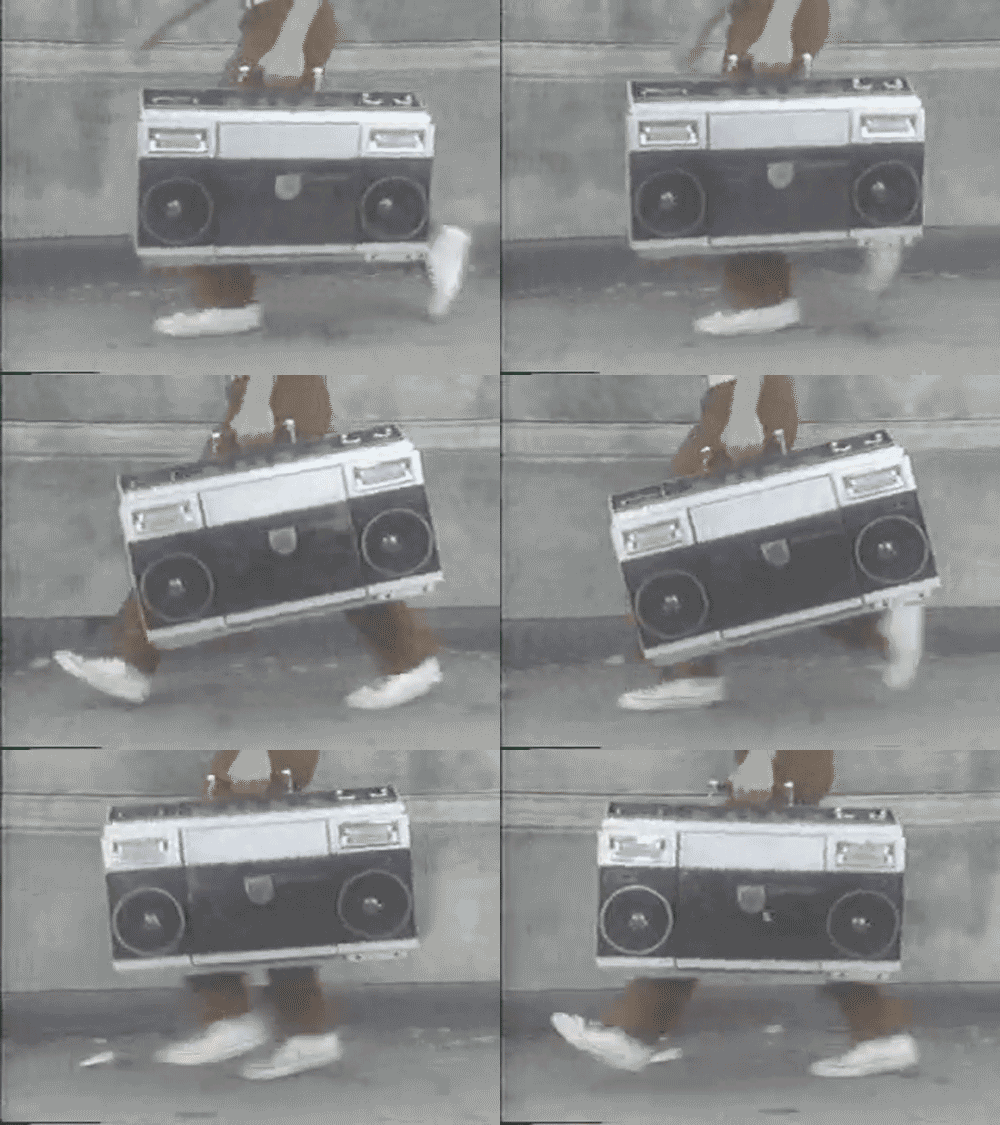
Ace of spayeds
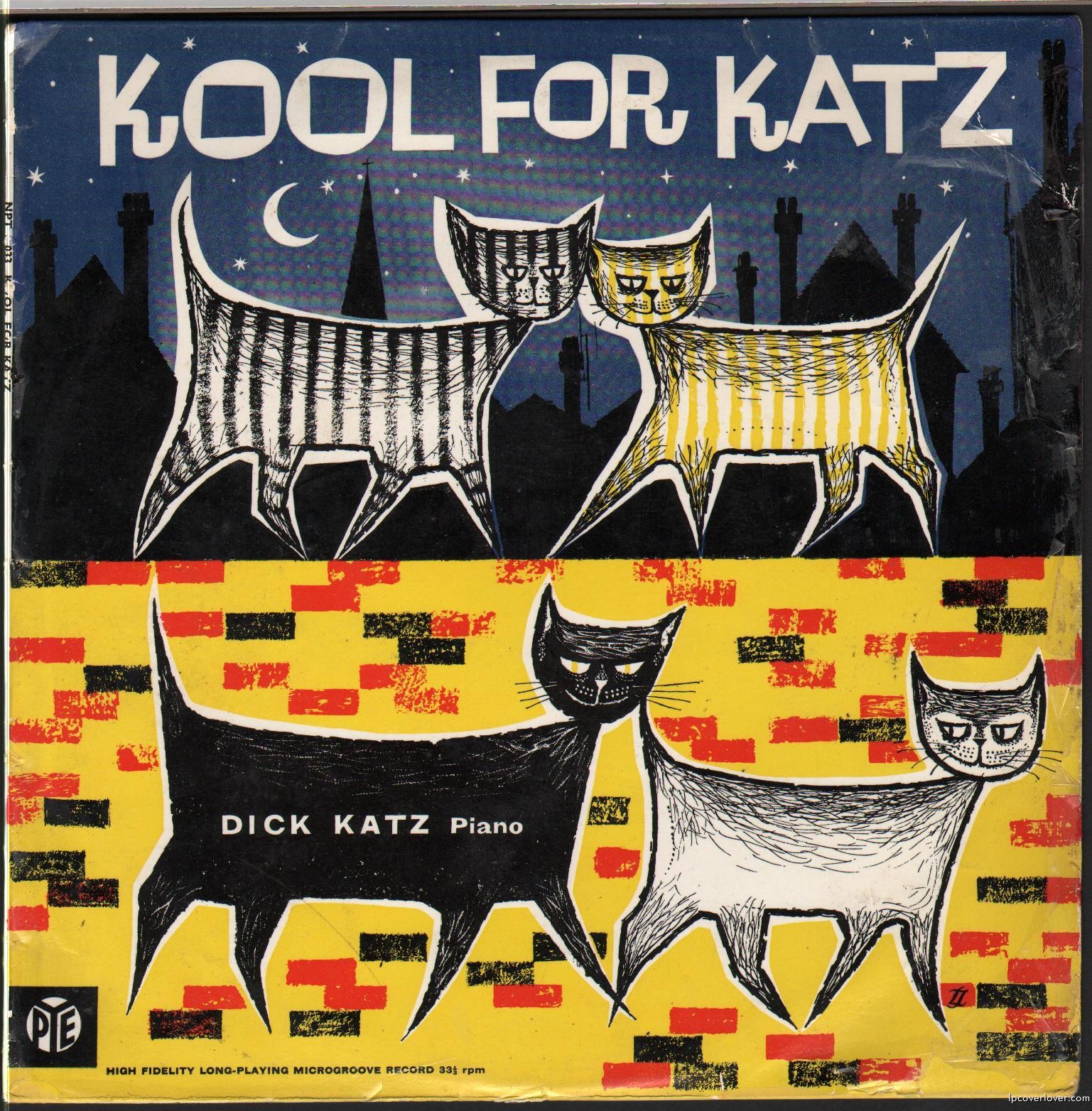
Kool for Katz Dick Katz PYE Records (UK) With drums, guitar and bass – Katz’s first sides as a leader after a decade with Ray Ellington.


 (47 votes, average: 3.94 out of 5)
 Loading ...
Kool for Katz Dick Katz PYE Records (UK) With drums, guitar and bass – Katz’s first sides as a leader after a decade with Ray Ellington.
(47 votes, average: 3.94 out of 5) Loading ...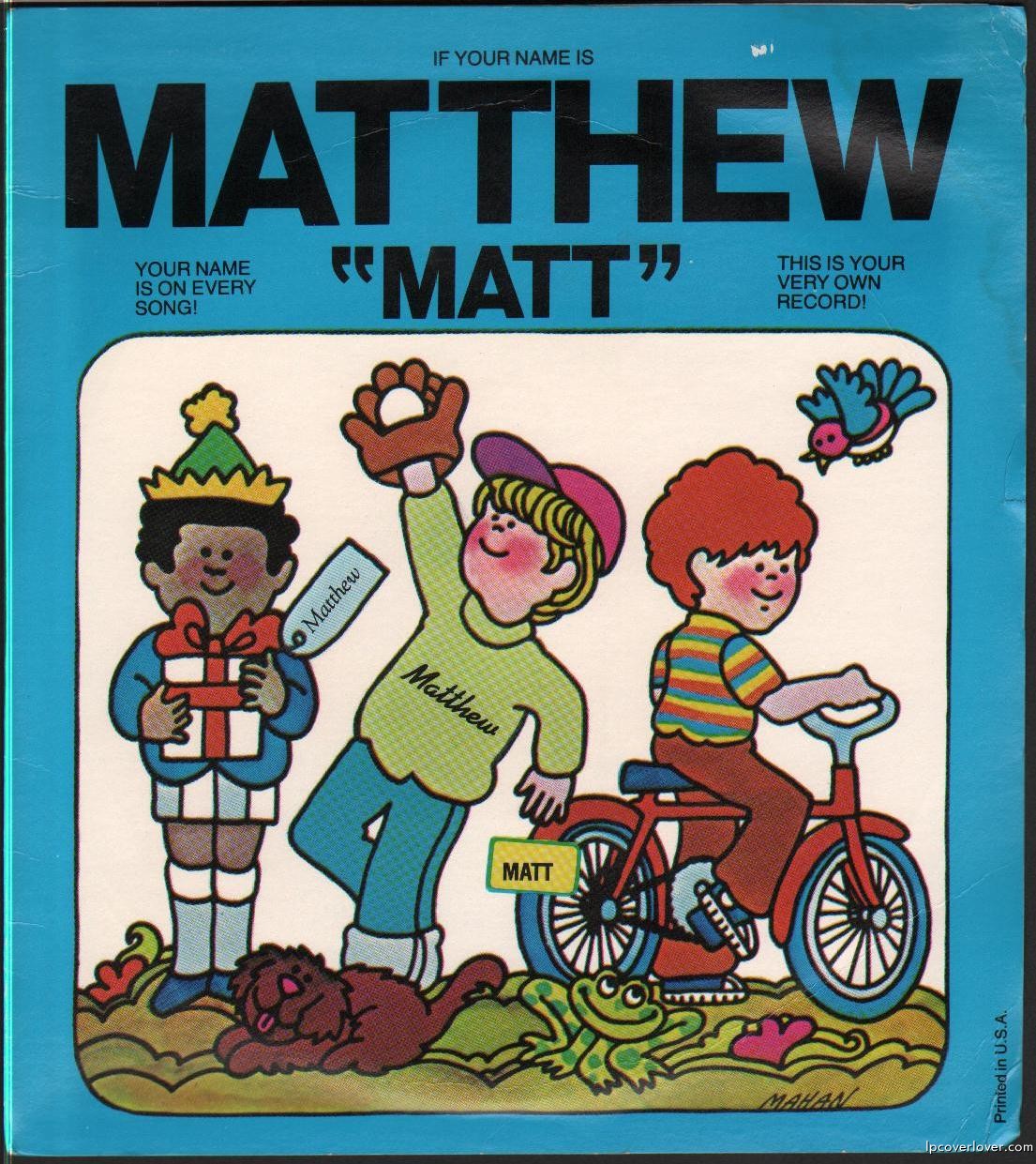
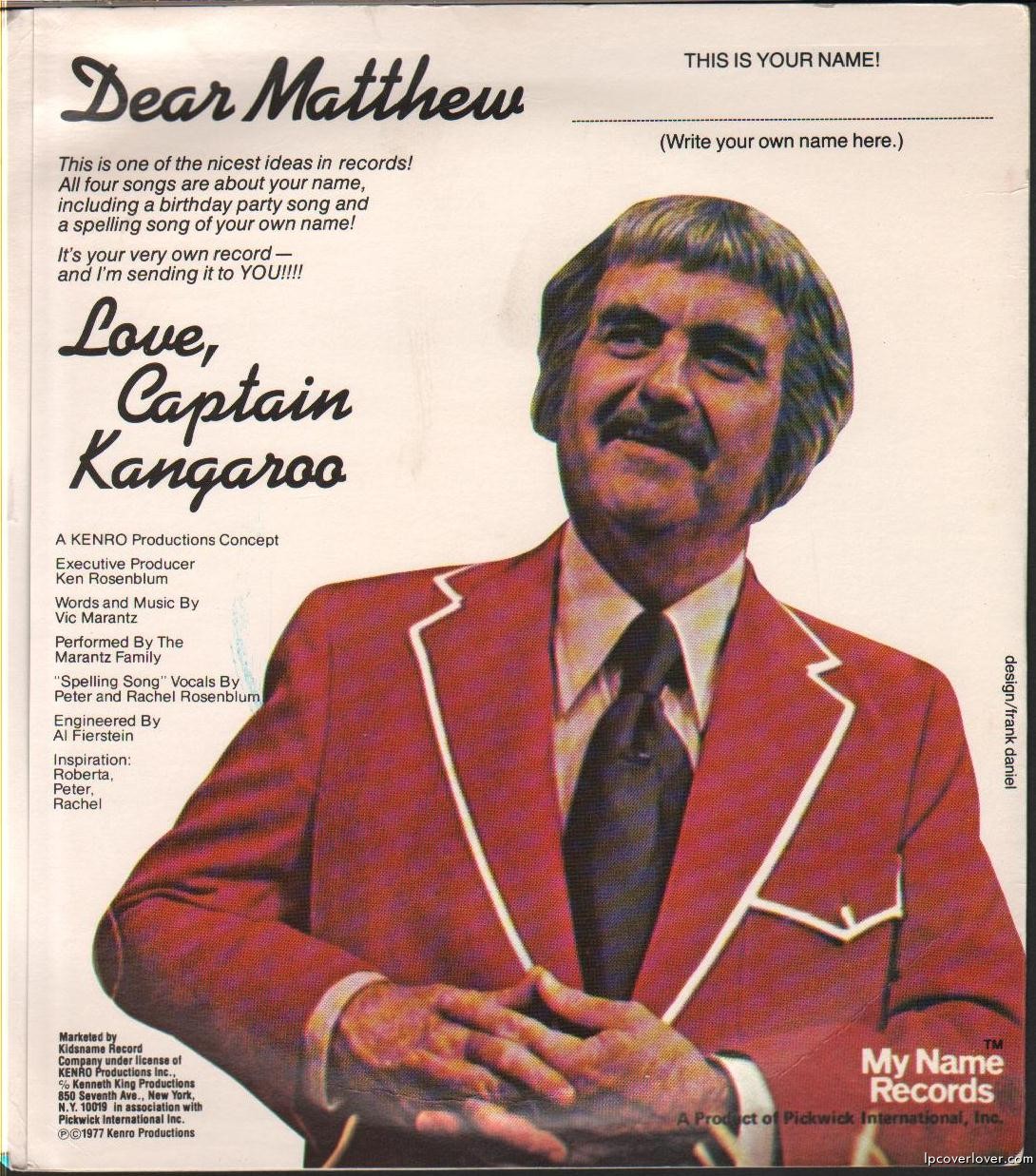
Captain Kangaroo My Name Records (1977)
(36 votes, average: 2.92 out of 5) Loading ...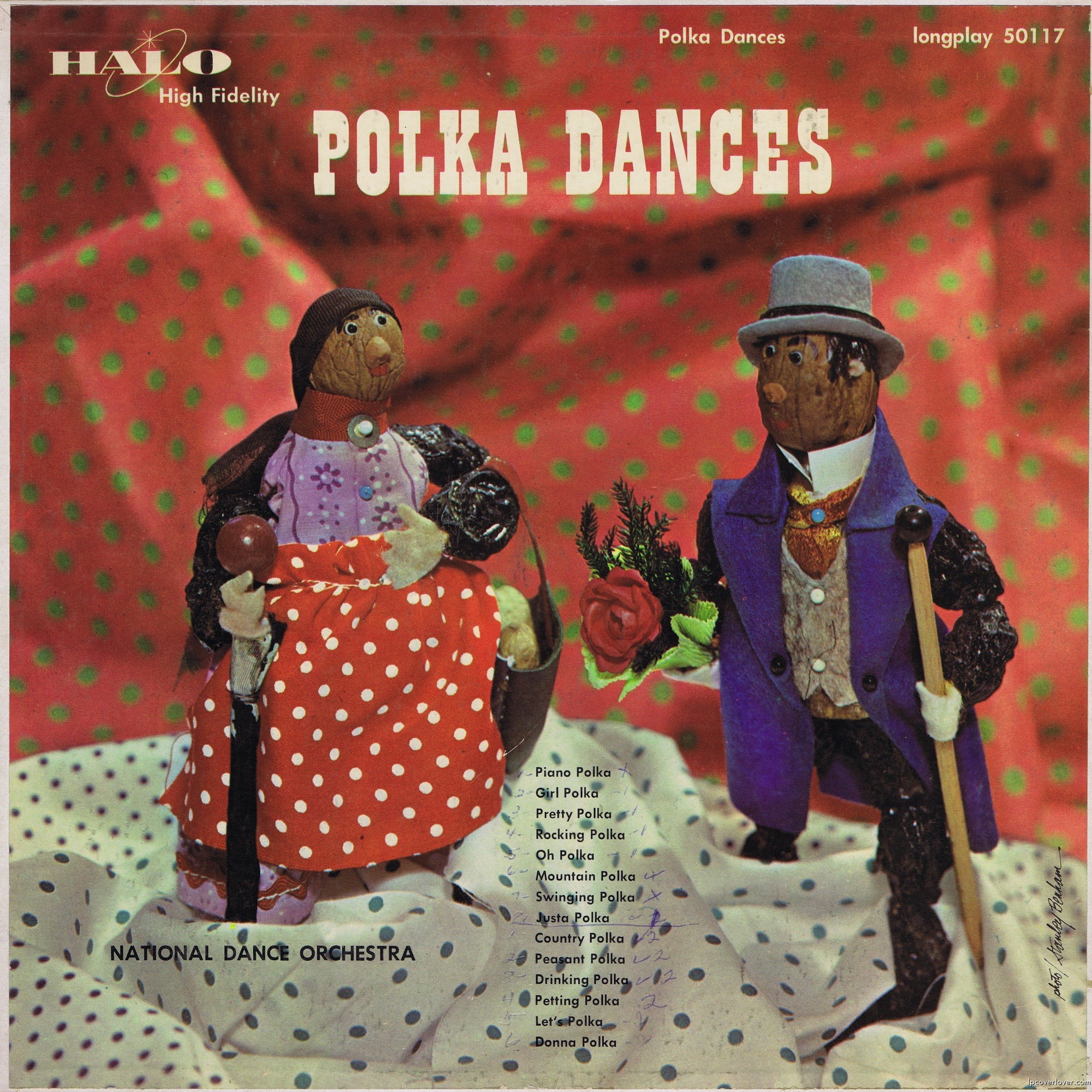
“Polka Dances” National Dance Orchestra Halo Records Courtesy of LP cover lover, MSgt Donald Patterson, Music Production Chief/Staff Arranger, “The President’s Own”, United States Marine Band
(44 votes, average: 3.45 out of 5) Loading ...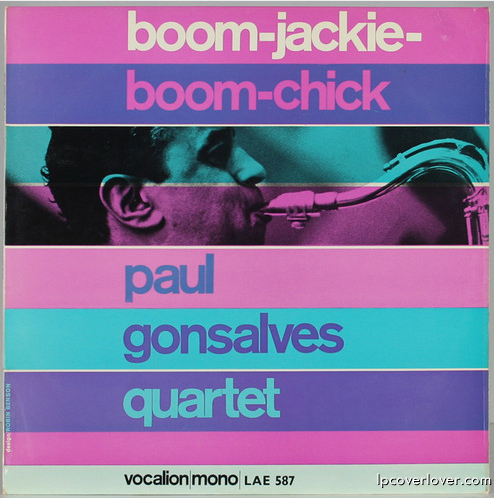
Paul Gonzalves Quartet “Boom-Jackie, Boom-Chick” (1964) Vocalion Records (UK) One of the most expensive and toughest albums to track down. This sells for over a grand on ebay if it shows up . Only 500 copies were pressed . The latin-flavored title track is a dedication to Jack Sharpe, one time jazz club owner, taxi driver and legendary London character. Gonsalves was a good mate of Sharpe’s, and Jackie “supervised” the album. Gonsalves died in Sharpe’s flat in 1974. Tremendous work from saxophonist Paul Gonsalves — one of his rare UK sessions from the 60s, all of which show that he had a tremendous sound that went way beyond his more famous work with Duke Ellington! The style here is tight, hip, and very grooving — work by a quartet that features Gonsalves on tenor, plus Pat Smythe on piano, Kenny Napper on bass, and Ronnie Stevenson on drums — all hitting a soulful hardbop style that’s very much like the best Tubby Hayes records from the time! Gonsalves’ tone is incredible — with that raspy, almost flatted mode that he used with Ellington — and it really stretches out here with plenty of room for creativity, in a way that makes us wonder why nobody ever got this one issued over on our side of the Atlantic. – Dusty Groove
(38 votes, average: 3.68 out of 5) Loading ...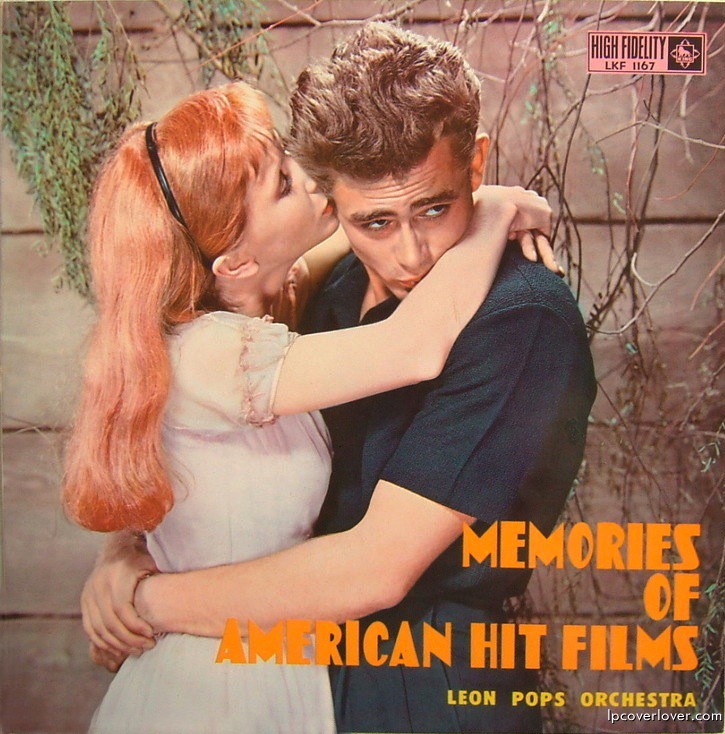
James Dean on the cover. “Memories of American Hit Films” Leon Pops Orchestra (Japan)
(42 votes, average: 3.81 out of 5) Loading ...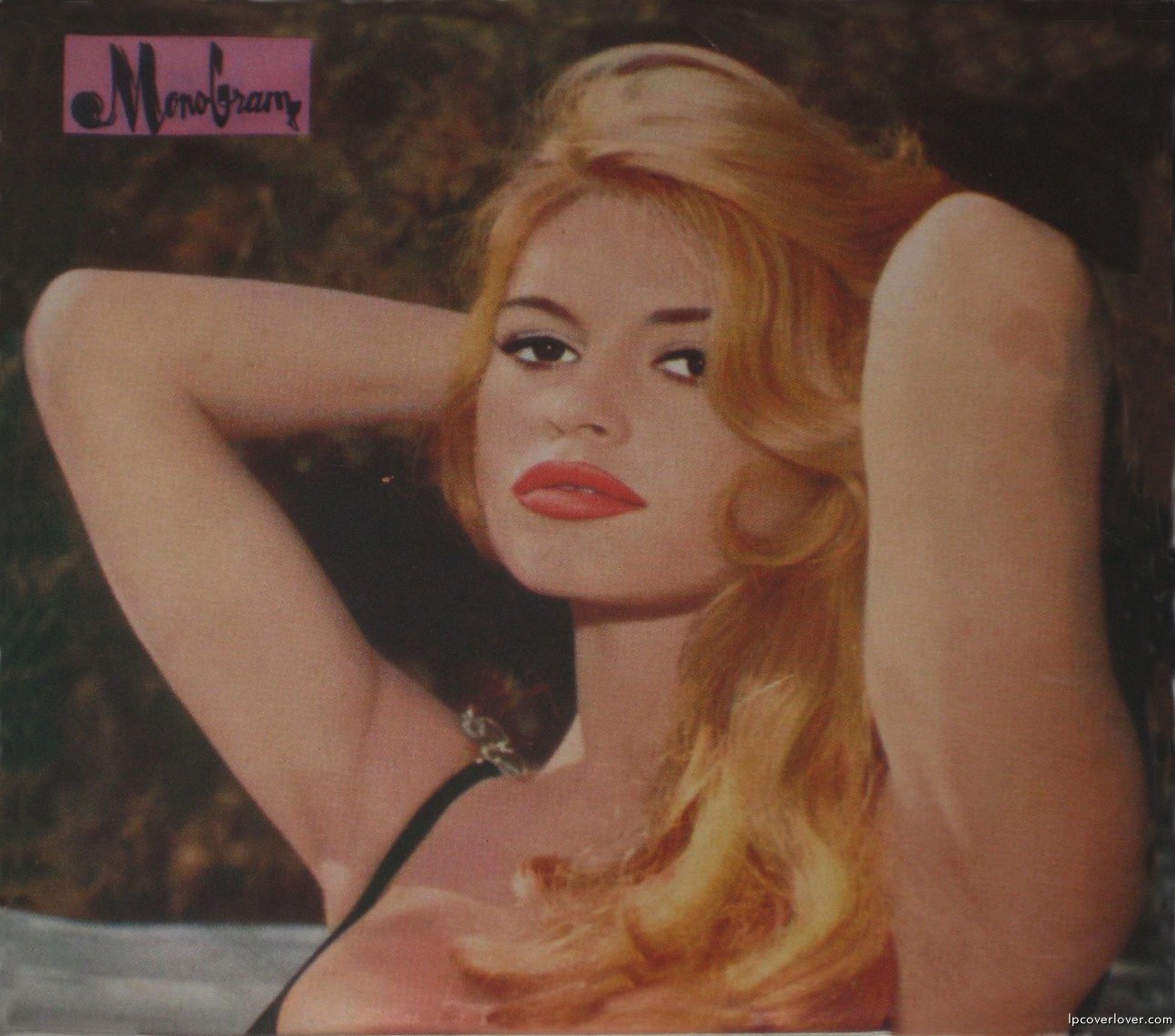
A rare Bridget Bardot cover from Iran. A Monogram Records EP from the sixties. Features unrelated music by Herve Vilard, The Sandpipers and the Four Tops. This is on eBay now for $300.
(43 votes, average: 3.77 out of 5) Loading ...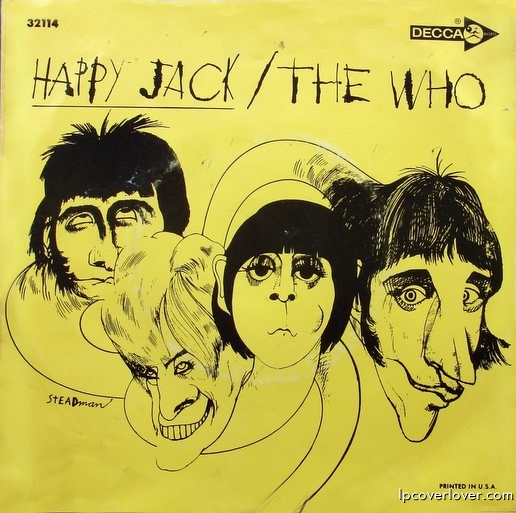
The Who “Happy Jack” / “Whiskey Man” Single – Decca Records, US (1966). Illustration by gonzo artist Ralph Steadman
(48 votes, average: 3.46 out of 5) Loading ...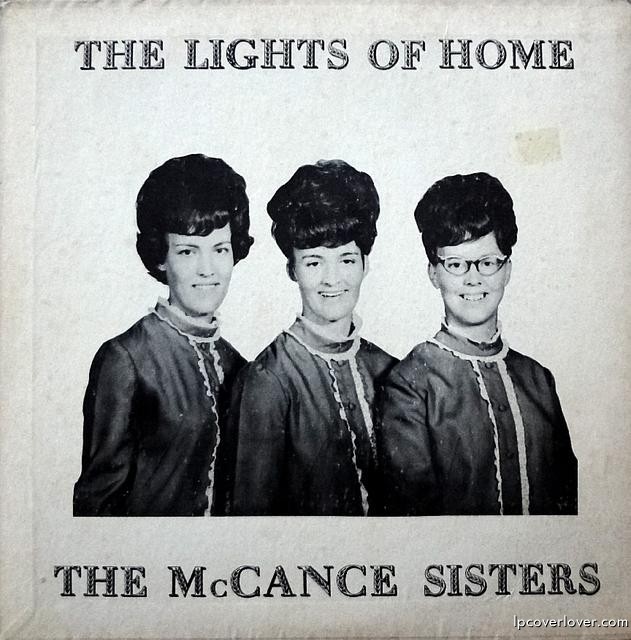
The McCance Sisters “The Lights of Home”
(43 votes, average: 3.65 out of 5) Loading ...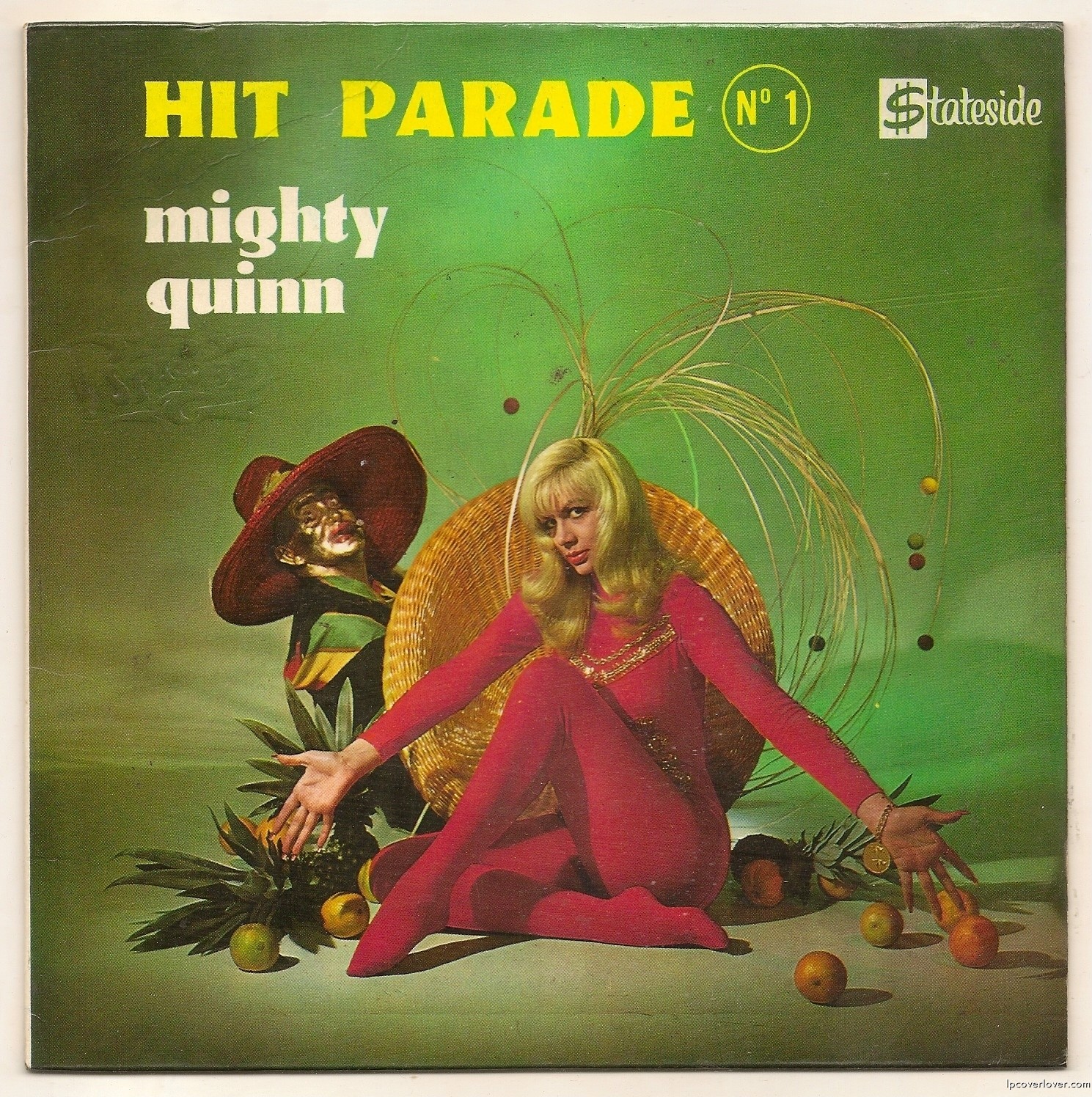
Hit Parade #1 Stateside Records EP (Portugal) Jay Stevens & Gil Grant SUDDENLY YOU LOVE ME / SCARBOROUGH FAIR / MIGHTY QUINN / WILL YOU LOVE ME TOMORROW
(37 votes, average: 3.59 out of 5) Loading ...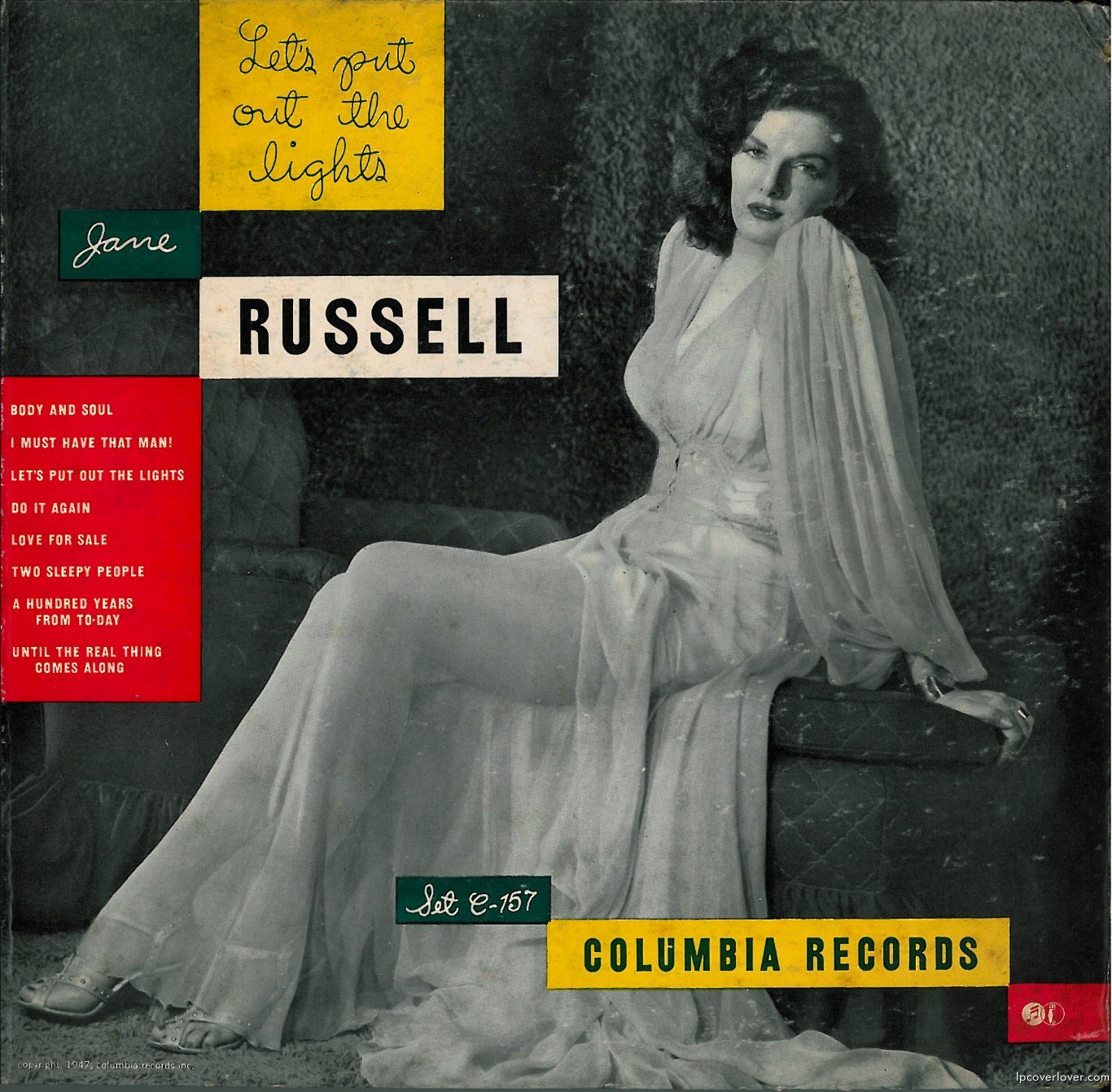
“Let’s Put the Lights Out” Columbia Records (1947) Jane Russell At the age of 25 in 1946, Jane Russell was a big movie star without many movies to justify her status. She had been signed to a seven-year contract by Howard Hughes at 19, and Hughes had spent nine months shooting her first film, The Outlaw, a western that was more about her cleavage than about its nominal subject, Billy the Kid. That got it in hot water with the Hays Office, and years went by while Hughes tinkered with the picture, then fought to get it released properly. Meanwhile, he had tens of thousands of photographs taken of Russell and lent her out for one other film, Young Widow. While she was waiting around for her movie career to take off, she got an offer from bandleader Kay Kyser to appear on his radio show, and after hearing her he signed her to a 12-week contract and even took her with him to Columbia Records for a couple of sides. As The Outlaw finally neared a New York opening, Columbia signed Russell on her own for this album, originally released on four 78s in 1947. The eight original tracks are bedroom ballads that she coos in a drowsy voice dripping with sex. The sentiments are well represented by such titles as “Do It Again” and “Love for Sale,” and on two songs, the title track and “Two Sleepy People.”
(57 votes, average: 4.39 out of 5) Loading ...