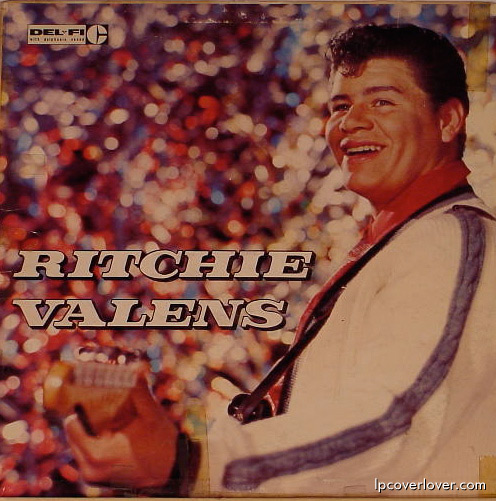
Ghost rider
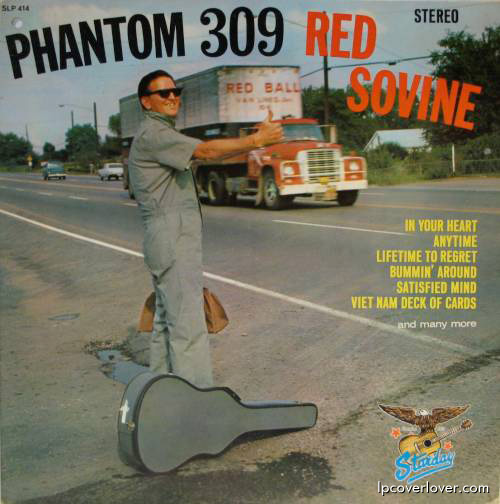
“Phantom 309” by Red Sovine on Starday records. Here he is on the Porter Wagner TV show.


 (27 votes, average: 3.44 out of 5)
 Loading ...
“Phantom 309” by Red Sovine on Starday records. Here he is on the Porter Wagner TV show.
(27 votes, average: 3.44 out of 5) Loading ...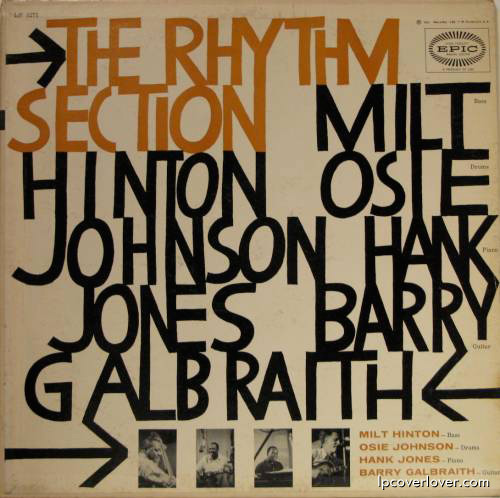
THE RHYTHM SECTION. Epic LN 3271. (1956)
Featuring Hank Jones, Milt Hinton, Barry Galbraith, and Osie Johnson.
TRACKS:
Hallelujah
Mona’s Feeling Lonely
Out of Braith
The Legal Nod
Polka Dots & Moonbeams
Minor’s Club
They Look Alike
Do Nothin’ Till You Hear From Me
Kookin’ In The Kitchen
Walk Chicken Walk…
Ruby My Dear
Koolin’ on the Settee
(16 votes, average: 4.13 out of 5) Loading ...
(23 votes, average: 2.09 out of 5) Loading ...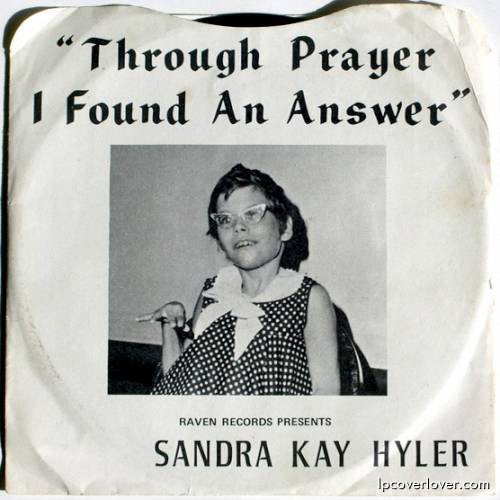
Oh the irony. I’m fascinated by this kind of faith-inspiring story put to vinyl and wonder if people found comfort in knowing that a crippled little girl found “an” answer (not however “the” answer) through prayer. I don’t know what the question was (but I’d guess “why me?”).
(30 votes, average: 3.23 out of 5) Loading ...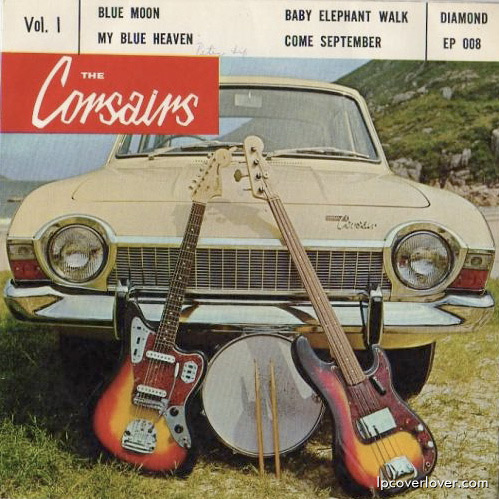
My new favorite car the Ford Corsair (1963 – 1970)
This ep was issued in Hong Kong for release in South East Asia in the mid-sixties. Guitar instrumentals as played by The Corsairs, one of the top Hong Kong bands showcasing the “beat” sound of the time around Asia.
(23 votes, average: 3.48 out of 5) Loading ...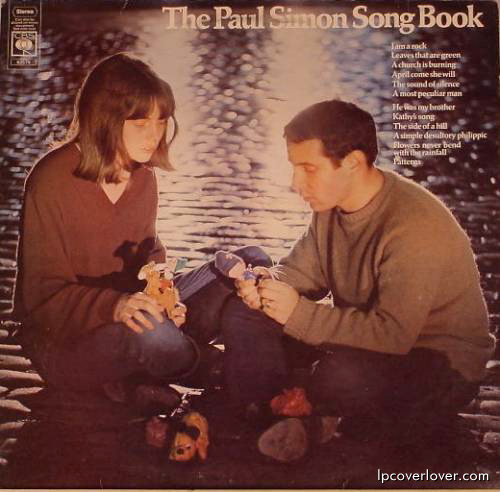
For admirers of Paul Simon this album, first released in 1965, is something akin to the Holy Grail. Recorded in between Simon & Garfunkel’s flop first album and The Sound of Silence hitting Number One in the United States, this captures, in a raw, almost demo, state, many of the songs that would turn up on subsequent S & G albums.
It hasn’t been available anywhere, in any format, for more than 20 years. Paul Simon, forever the perfectionist, was unhappy with the basic nature of the recording and has vetoed its release at every turn.
At this point in his career Simon was living in England, and this album was recorded in a Soho studio in a couple of hours, an especially remarkable feat given that Simon’s albums these days take years, not hours to make.
Many of the songs had previously been used in a BBC radio religious slot – hence the decision to record the album. It’s easy to see, in retrospect, why songs such as A Most Peculiar Man (about a suicide case), the quasi Bob Dylan protest songs A Church Is Burning and He Was My Brother and, of course, The Sound of Silence, with its theme of the lack of communication, would appeal to the earnest folks in BBC religious programming. Not that Paul didn’t have a sense of humour, A Simple Desultory Philippic being a brilliant name-dropping Dylan parody that would turn up, in a radically different form, on the Parsley Sage LP.
Some of the songs on this album, April Come She Will and Kathy’s Song, are almost interchangeable with later versions, although Simon’s vocal on April is, if anything, preferable to Garfunkel’s rather more pristine take of the same song on the Sounds of Silence LP. (The mythical Kathy, Simon’s one-time muse and lover, is on the cover of this album).
The Sound of Silence is, however, radically different to later versions, possessing a repressed frustration and anger that was smoothed over in the S & G interpretation. The same goes for I Am A Rock, which has an urgency missing from the better-known electrified version. As with so many other tracks – Leaves That Are Green, Flowers Never Bend and Patterns – the sparse, uncluttered versions captured on this album now sound fresher than the sometimes over-arranged productions on the S & G albums.
There’s even one song, On The Side Of A Hill, that doesn’t appear anywhere else (except as part of the arrangement for Scarborough Fair). – Simon Evans
(11 votes, average: 3.73 out of 5) Loading ...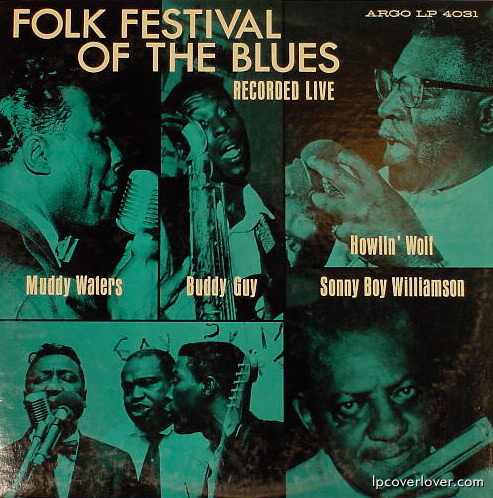
This is a compilation album that isn’t, a live album that isn’t (at least in a couple of spots), and a Muddy Waters album that isn’t, if one counts the appearances by four other artists on it. But for all things it isn’t, it is also just happens to be one of the greatest and certainly most underrated live blues album of all time, unbelievably crude, raw, and as real as it gets. Originally issued on Chess’ Argo label during the height of the folk music blues revival (hence the goofy title), this was a record that was aimed at a white market who responded in kind. But anybody purchasing it thinking they were getting some nice acoustic coffeehouse blues were in for the reality-check shock of their lives. Recorded on July 26, 1963 at a WPOA live radio broadcast emceed by local Chicago disc jockey Big Bill Hill emanating from the Copacabana Club (hence when this was reissued in 1967, it was retitled Blues From Big Bill’s Copacabana), this features Buddy Guy’s band as the backup band for everybody, augmented by Muddy’s right hand man, pianist Otis Spann. Although Big Bill announces the presence of Little Walter and Sonny Boy Williamson on the album’s intro, they’re no-shows; the studio version of Williamson’s “Bring It On Home” appears here with dubbed on applause (along with the studio version of Guy’s “Worried Blues,” one of the two bits of audio chicanery here). Everything else is just amazingly raw, crude and blistering, with some of the most electrifying Buddy Guy guitar ever committed to tape, droning saxes, thundering drums, and Otis Spann anchoring everything with consummate elegance, as nobody’s bothered to check their tuning in the last half dozen drinks or more. The combination of performances of Guy, Howlin’ Wolf, Willie Dixon, and Sonny Boy in tandem with Waters would certainly checklist this one into ‘various artists’ category, but with half of the 10 tracks here being fronted by Waters, it’s clearly Muddy’s show all the way. His performances of “I Got My Mojo Working,” “She’s 19 Years Old,” “Clouds In My Heart,” “Sitting And Thinking,” and the vocal trio effort with Guy and Dixon on the show opening “Wee Wee Baby” are nothing less than exemplary. No matter how you slice it or end up filing it, one would be very hard pressed indeed to find a live blues album that captures the spirit and a moment in time the way this one does. Unavailable on compact disc as of press time, but worth tracking down in its vinyl incarnations at any cost. ~ Cub Koda, All Music Guide
(22 votes, average: 4.32 out of 5) Loading ...