Welcome to the weird and wonderful world of record covers from the golden age of LPs


Subscribe to feed Follow us on Twitter Follow us on Tumblr

2008

Country roads

img_4188.JPG

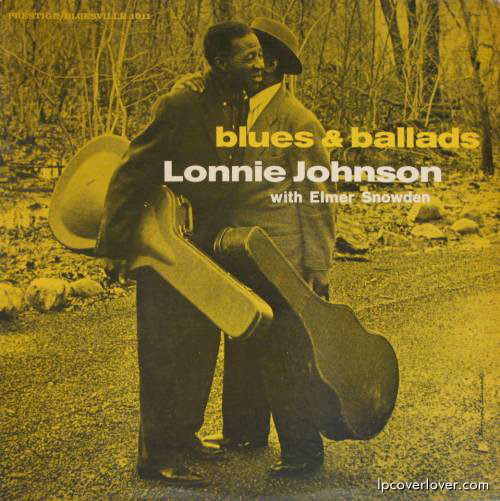
“Blues & Ballads” Lonnie Johnson with Elmer Snowden   Prestige/Bluesville (1960)

This beautiful album was engineered by Rudy Van Gelder in his Englewood Cliffs, New Jersey, home studio where so much jazz history was made. It features guitar innovators Lonnie Johnson and Elmer Snowden together for the first time–despite a friendship going back to the 1920s when both appeared on some of the earliest jazz and blues 78s. Johnson, the father of single-note six-string soloing, is in marvelous voice on this selection of blues, ballads, and jazz, crooning the double-entendre “Jelly Roll Baker” and the heartache-laden “Back Water Blues” (a Bessie Smith tune he first cut in 1927) with a marksman’s sense of pitch and chilling nuance. Snowden serves mostly as accompanist. But these men play so closely that they seem to be sharing every breath. –Ted Drozdowski

1 Star2 Stars3 Stars4 Stars5 Stars (24 votes, average: 4.38 out of 5)
Loading ... Loading ...

Light jazz

hamptonclef1.jpg

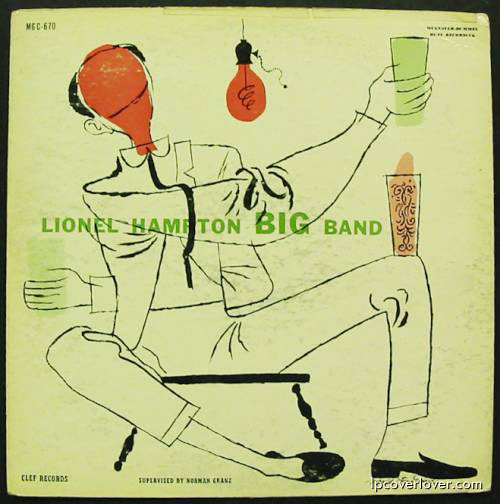
Lionel Hampton BIG Band. David Stone Martin illustration. Clef Records. Produced by Norman Granz.

1 Star2 Stars3 Stars4 Stars5 Stars (30 votes, average: 4.27 out of 5)
Loading ... Loading ...

Home sweet home

img_4210.JPG

img_4213.JPG

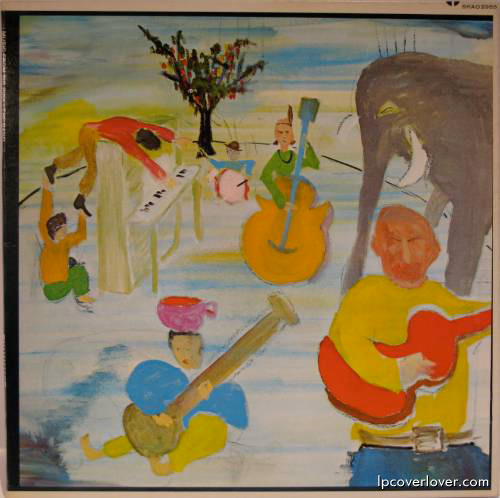
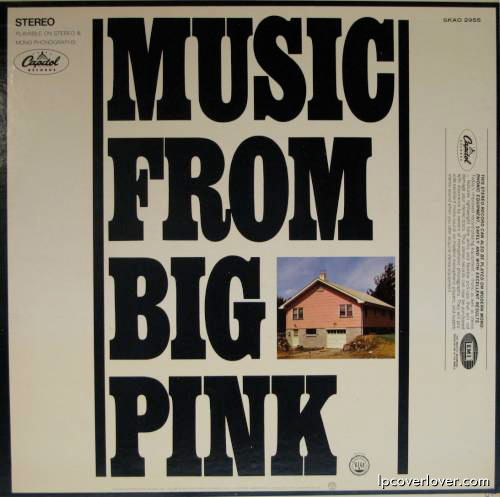
The Band’s debut album. “Music From Big Pink. Read Al Koopers review from Rolling Stone in 1968 here. Bob Dylan’s naive art graces the cover and indicates the unpretentious and back-to-roots approach of the music within. A watershed release and a kind of response to the studio wizardry of “Sgt. Pepper” the year before. Big Pink landed at the height of psychedelia and brought an earthiness to the scene; changing the course of music and influencing many including Eric Clapton (who cites it as his reason for leaving Cream).

1 Star2 Stars3 Stars4 Stars5 Stars (20 votes, average: 3.85 out of 5)
Loading ... Loading ...

Soil music

img_4269.JPG

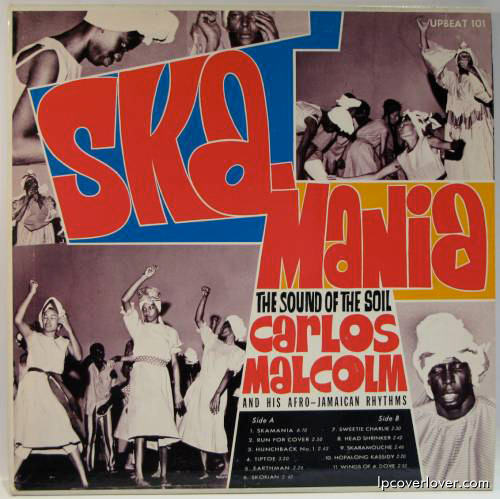
Ska Mania “The Sound of the Soil” Carlos Malcolm and his Afro-Jamaican Rhythms. (1965) Upbeat Records.

Ska bandleader Carlos Malcolm was an underappreciated figure of the music’s early days, and also made some recordings in New York in a more Americanized vein. A native of Kingston, Malcolm received formal musical training and broke into the business playing trombone with the legendary Don Drummond in a jazz group in the late ’50s. In 1962, he was tapped to head the ten-piece house orchestra of the newly established state radio organization the Jamaican Broadcasting Corporation, and wrote some of the first formal ska arrangements as a result. He also composed uncredited music for the soundtrack of the first James Bond film, Dr. No (which was partly filmed in Jamaica), and formed his own group, the Afro-Jamaican Rhythms, whose music melded ska, African, Latin, and jazz rhythms. They scored hits in Jamaica with “Rukumbine” (1963) and, especially, “Bonanza Ska” (1964, a reworking of TV’s “Bonanza” theme song); they also recorded three albums, the most prominent of which was Ska Mania. During the ’60s, Malcolm also traveled to New York and recorded three albums that blended a Caribbean sensibility with American musics. The Roulette release Don’t Walk, Dance! (around 1964) was the first of these, boasting a jazzy, Latin-flavored sound; it was followed in 1966 by Sounds of the Caribbean (Scepter), credited to Carlos Malcolm & the Jamaica Brass. Perhaps the most prized item in Malcolm’s catalog, Bustin’ Outta the Ghetto (released on AJP in the late ’60s) was a collection of full-fledged funk instrumentals that touched only tangentially on Jamaican music. Malcolm eventually settled in San Diego. ~ Steve Huey, All Music Guide

1 Star2 Stars3 Stars4 Stars5 Stars (18 votes, average: 4.11 out of 5)
Loading ... Loading ...

Oh, baby that’s a what I like!

img_4226.JPG

The Big Bopper (J.P. Richardson) “Chantilly Lace” Mercury Records (1958)

With the success of “Chantilly Lace,” Richardson joined Buddy Holly and The Crickets, Richie Valens and Dion & The Belmonts for a “Winter Dance Party” tour. On February 2, 1959, Buddy Holly chartered a small plane to take him and his new Crickets band (Tommy Allsup and Waylon Jennings) to Fargo, North Dakota. Richardson came down with the flu and didn’t feel comfortable on the bus, so Jennings gave his plane seat to Richardson. Valens had never flown on a small plane and requested Allsup’s seat. They flipped a coin, and Valens won the toss.

In the early morning of February 3, 1959, in Clear Lake, Iowa, the small four-passenger Beechcraft Bonanza took off from the Mason City airport during a blinding snow storm and crashed into Albert Juhl’s corn field several miles after takeoff at 1:05 a.m. Richardson was in the seat that Waylon Jennings was supposed to have occupied. The crash killed Holly, Valens, Richardson and the 21-year-old pilot, Roger Peterson. In his 1971 hit song “American Pie” Don McLean referred to this event as “The Day the Music Died”.

1 Star2 Stars3 Stars4 Stars5 Stars (26 votes, average: 4.12 out of 5)
Loading ... Loading ...

Televis

img_4200.JPG

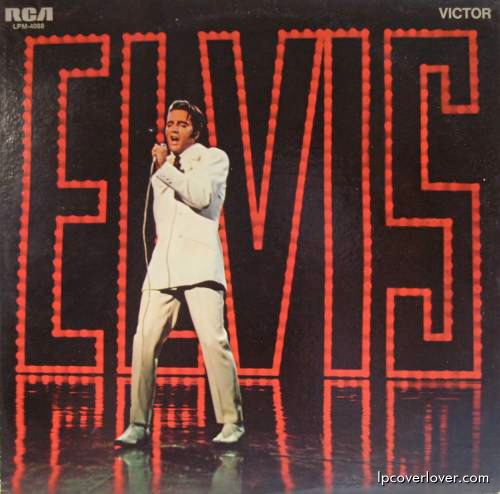
ELVIS – NBC – TV SPECIAL (LP) (US) RCA LPM 4088 Released: December 1968

1 Star2 Stars3 Stars4 Stars5 Stars (29 votes, average: 3.38 out of 5)
Loading ... Loading ...

300 lbs of joy

img_4186.JPG

Howlin’ Wolf – “The Real Folk Blues” Recorded in Chicago, Illinois between 1956 & 1965. (In the mid-’60s, Chess Records released a great series of compilations by some of its best blues artists, all of them called THE REAL FOLK BLUES) “Killing Floor,” “Built for Comfort”,”Three Hundred Pounds of Joy”, “Natchez Burning,” “Tail Dragger” and more.

Personnel: Howlin’ Wolf (vocals, guitar, harmonica); Hubert Sumlin*, Willie Johnson, Otis “Smokey” Smothers, Jody Williams (guitar); J.T. Brown (tenor saxophone); Donald Hankins (baritone saxophone); Johnny Jones, Lafayette Leake, Hosea Lee Kennard (piano); Willie Dixon, Buddy Guy, Andrew Palmer (bass); Sammy Lay, Earl Phillips, Junior Blackman (drums).

“Howlin’ Wolf ranks among the most electrifying performers in blues history, as well as one of its greatest characters. He was a ferocious, full-bodied singer whose gruff, rasping vocals embodied the blues at its most unbridled. A large man who stood more than six feet tall and weighed nearly 300 pounds, Howlin’ Wolf cut an imposing figure, which he utilized to maximum effect when performing. Howlin’ Wolf cut his greatest work in the Fifties for the Chicago-based Chess Records. Many songs with which he is most closely identified – “Spoonful,”  “Back Door Man,”  “Little Red Rooster”  and “I Ain’t Superstitious”  – were written for him by bluesmen Willie Dixon, a fixture at Chess Records who also funneled material to Wolf’s main rival, Muddy Waters. Howlin’ Wolf himself was an estimable songwriter, responsible for such raw classics as “Killing Floor,”  “Smokestack Lightning”  and “Moanin’ at Midnight.” 

In 1910, Howlin’ Wolf was born on a Mississippi plantation in the midst of a blues tradition so vital it remains the underpinning for much of today’s popular music. His birth name was Chester Arthur Burnett; “Howlin’ Wolf”  was a nickname he picked up in his youth. He was exposed to the blues from an early age through such performers as Charley Patton and Willie Brown, who performed at plantation picnics and juke joints. Wolf derived his trademark howl from the “blue yodel”  of country singer Jimmy Rodgers whom he admired. Although he sang the blues locally, it wasn’t until he moved to West Memphis in 1948 that he put together a full-time band. Producer Sam Phillips recorded Howlin’ Wolf at his Memphis Recording Service (later Sun Records) after hearing him perform on radio station KWEM. Some of the material was leased to Chess Records, and in the early Fifties Howlin’ Wolf signed with Chess and moved to Chicago. He remained there until his death. (The Rock and Roll Hall of Fame)

*On a personal note, I just saw Hubert Sumlin playing an all Howlin’ Wolf set with a group including David Johansen and James Blood Ulmer – it killed!

1 Star2 Stars3 Stars4 Stars5 Stars (28 votes, average: 4.36 out of 5)
Loading ... Loading ...

Get Bizet!

grace-bumbry.jpg

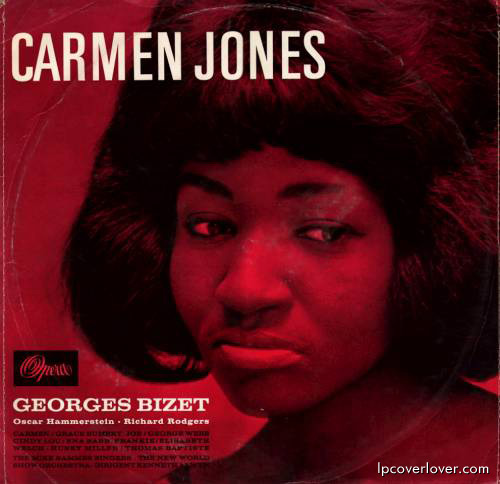
Have you met Miss Jones?   This is “the great” Grace Bumbry from Kerstan in Germany.

1 Star2 Stars3 Stars4 Stars5 Stars (22 votes, average: 4.05 out of 5)
Loading ... Loading ...

Things are about to get really crazy here

covers-tanzmusik.jpg

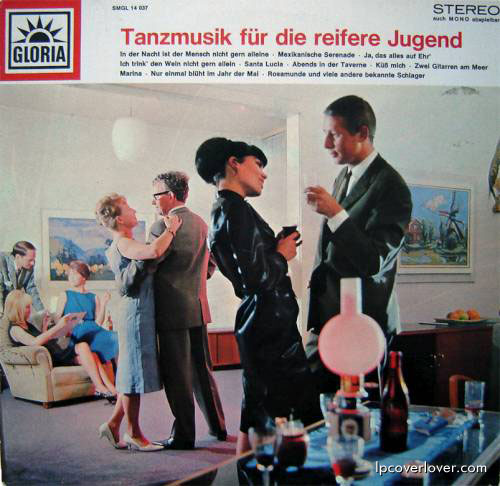
“LP Cover Lover” is a great site! I really enjoy it. Maybe you can use this little gem from Germany. There’s no year on it, but I guess it’s from the early sixties. “Tanzmusik fà ¼r die reife Jugend” means “Dance Music For The Mature Youth”. The picture on the cover shows how much fun the mature youth is having. The music is played by “Karlchen’s Ballhaus-Rhythmiker”. You could translate it with “Little Carl’s Dance Hall Rhythmicians” . They surely know their foxtrot, tango, polka, waltz, and even samba! There are many gorgeous details. The booze in the foreground, the windmill on the painting in the background, the fancy black dress of the woman in the foreground. The dancing couple… Wouldn’t we all like to be invited to such a party?”   Regards, Jan Derrer (Switzerland)

1 Star2 Stars3 Stars4 Stars5 Stars (21 votes, average: 4.05 out of 5)
Loading ... Loading ...

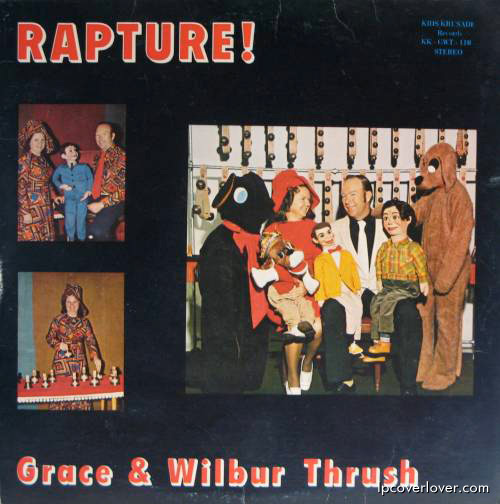
Guys and dolls

img_4198.JPG

Grace and Wilbur Thrush — “Rapture!”

1 Star2 Stars3 Stars4 Stars5 Stars (24 votes, average: 2.92 out of 5)
Loading ... Loading ...