Welcome to the weird and wonderful world of record covers from the golden age of LPs


Subscribe to feed Follow us on Twitter Follow us on Tumblr

Author Archive

The Passions of Les Baxter
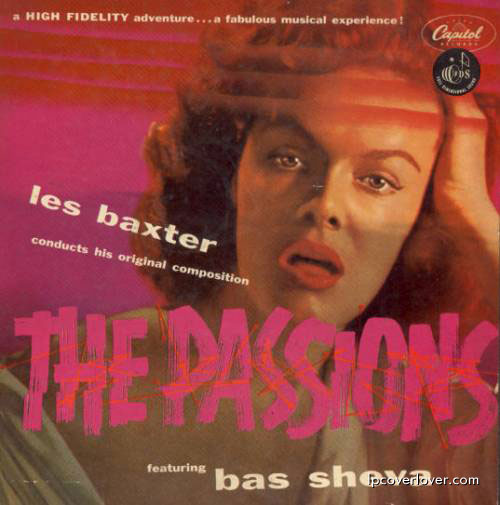
front-cover2.jpg

Vocalist Bas Sheva was born Beatrice Kurzman to a wealthy and prominent Jewish family in Philadelphia. When Kurzman decided to go into show business she adopted the name “Bas Sheva” (i.e., the Biblical “Bathsheba”) in order not to embarrass her family. She formally studied the voice and developed an extremely powerful instrument with extraordinary dexterity, and probably got her start singing in the so-called “Borscht Belt” of Catskill Mountains resorts. Her recording career began around 1950 with a small number of obscure singles of standards, none of which sparked much interest.

In 1953 Bas Sheva was engaged by bandleader Hal Mooney as the principal voice on Soul of a People, a collection of traditional Jewish songs issued by Capitol. This was a very successful disc in the Jewish market, and Bas Sheva’s brassy, no holds barred delivery of this familiar material was an important element in making Soul of a People appealing. Nonetheless, Bas Sheva did not record again for another five years, and she may have felt somewhat typecast as a primarily Jewish entertainer.

Composer and Capitol Records producer Les Baxter came to her rescue by offering Bas Sheva the role of star vocalist on his suite The Passions. Bas Sheva’s performance on The Passions is quite amazing even 50 years on; she screams, wails, whimpers, howls, grunts, and even acts a little to the pulsating rhythms of Baxter’s dark, gritty, and complex musical score. While The Passions was the very embodiment of innovation in an era that encouraged musicians to stretch out, it was considered far too edgy, obscure, and over the top in its time and was not a success. Despite this great showcase of all the astounding things Bas Sheva could do with her voice, she was never to record again.

In 1960 Bas Sheva died at age 34 from a diabetic reaction suffered while entertaining on board a cruise ship. ~ Uncle Dave Lewis, All Music Guide

1 Star2 Stars3 Stars4 Stars5 Stars (14 votes, average: 4.14 out of 5)
Loading ... Loading ...
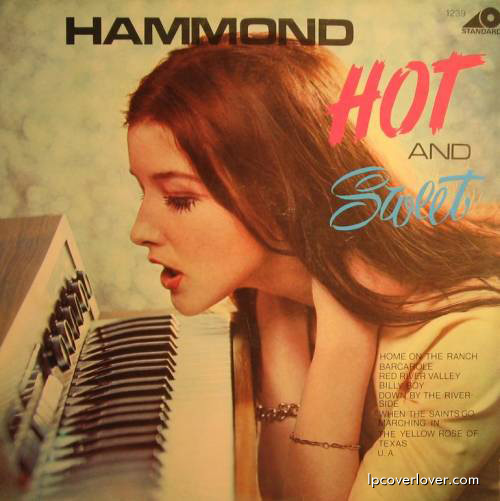
Going down on the organ

uwejohstheinoschildt-hammondhotandsweetklein.jpg

Must be a player piano!

1 Star2 Stars3 Stars4 Stars5 Stars (14 votes, average: 4.64 out of 5)
Loading ... Loading ...

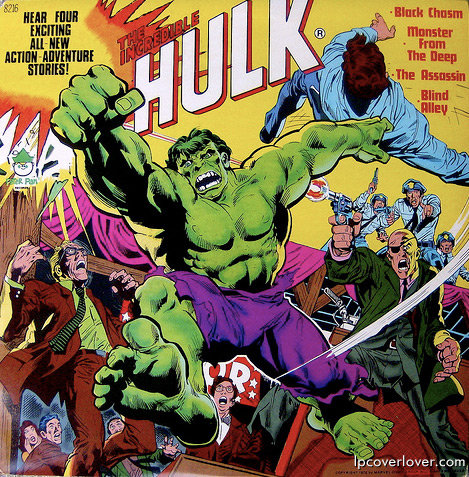
Go green!

653674019_a5ea939add.jpg

The Incredible Hulk “Hear Four Exciting All-New Action-Adventure Stories” on Peter Pan Records.

1 Star2 Stars3 Stars4 Stars5 Stars (14 votes, average: 2.79 out of 5)
Loading ... Loading ...

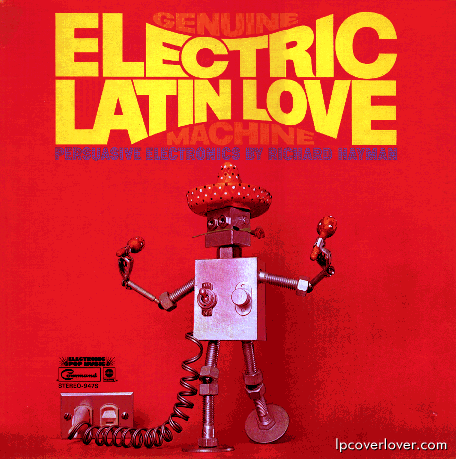
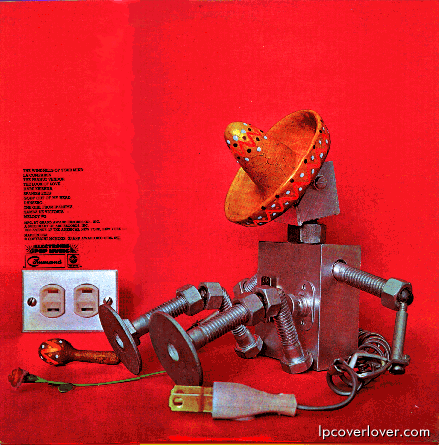
Genuine Electric Latin Love Machine

ellm.gif

ellm_reverse.gif

Genuine Electric Latin Love Machine Persuasive electronics by Richard Hayman. Front and back cover. 1969. Moog synthesizer arranged by Richard Hayman, programmed by Walter Sear. Cover art and design: Stephen Maka/Henry Epstein.

1 Star2 Stars3 Stars4 Stars5 Stars (28 votes, average: 3.86 out of 5)
Loading ... Loading ...

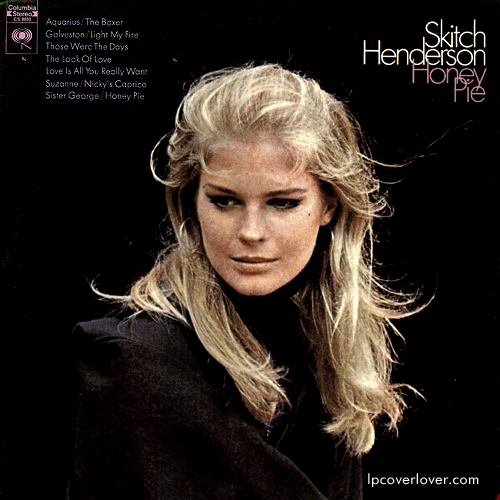
Cover Girl: Candice Bergen

candy.gif

Man was Candice Bergen beautiful. Here she is as a model on the cover of a corny Skitch Henderson e-z listening lp.

Candice Bergen was the daughter of ventriloquist Edgar Bergen and his wife Frances, a former Chesterfield girl. When Candice was born, many news stories noted that Bergen’s dummy Charlie McCarthy now had a sister. She displayed a gift early on for comedy when as a child she was a guest on her father’s radio show. She grew up privileged and was childhood friends with Gregory Peck’s and Judy Garland’s children and often spent time amusing herself at family friend Walt Disney’s home. She briefly attended the University of Pennsylvania in the mid 1960’s. She was named homecoming queen in her freshman year, but left to begin a career as a Ford model. Her earnings allowed her to indulge in her passion for photography; later shooting photographs for Life, Esquire and Playboy.

Throughout the 1960’s, she would attend lavish parties thrown by the likes of CBS president William Paley, but also hung out with the Black Panthers and got arrested for lying down on the floor of the U.S. Senate. Candice indulged in writing (her works appeared in Playboy and she also wrote a play titled “The Freezer”), photojournalism, and acting.

Candice was asked by director Sidney Lumet to play Lakey, an icy lesbian in “The Group”   Then she was cast as a missionary opposite Steve McQueen in Robert Wise’s “The Sand Pebbles”.   In 1971, she starred in Mike Nichols’ “Carnal Knowledge” with Jack Nicholson and Art Garfunkel. She was the first woman to host “Saturday Night Live”, and also contributed news stories for NBC news. All before Murphy Brown!

1 Star2 Stars3 Stars4 Stars5 Stars (24 votes, average: 4.04 out of 5)
Loading ... Loading ...

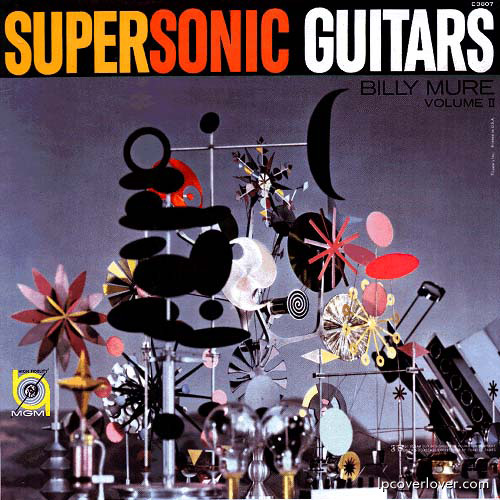
Mure, Mure, Mure

supersonic.jpg

Volume II of “Supersonic Guitars” by Billy Mure on MGM Records.

On the cover: “Forecast Solar Toy Designed for Aluminum Company of America’s Forecast Collection by Charles Eames.”

1 Star2 Stars3 Stars4 Stars5 Stars (15 votes, average: 3.33 out of 5)
Loading ... Loading ...

Shakin’ not stirred

469363746_80555fcac1_o.jpg

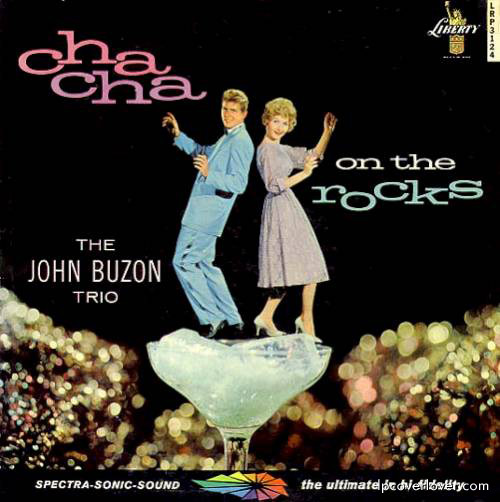
The John Buzon Trio “Cha Cha On the Rocks” (Liberty Records)

1 Star2 Stars3 Stars4 Stars5 Stars (27 votes, average: 3.48 out of 5)
Loading ... Loading ...

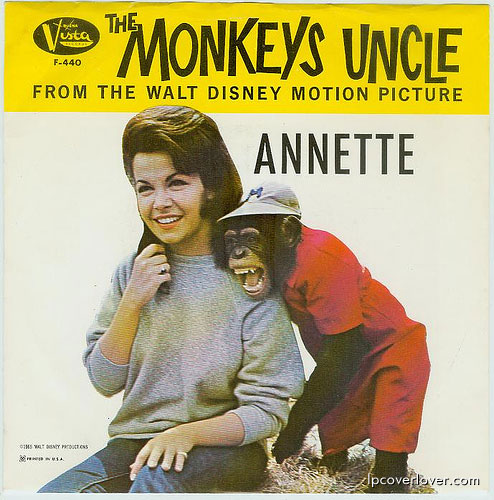
Chimp chimp chiree

511667733_d67b9e9493.jpg

“The Monkey’s Uncle” (1965) Disney movie with Annette Funicello.   The Beach Boys perform the title track in this bad sequel to “The Misadventures of Merlin Jones”.

1 Star2 Stars3 Stars4 Stars5 Stars (21 votes, average: 3.62 out of 5)
Loading ... Loading ...

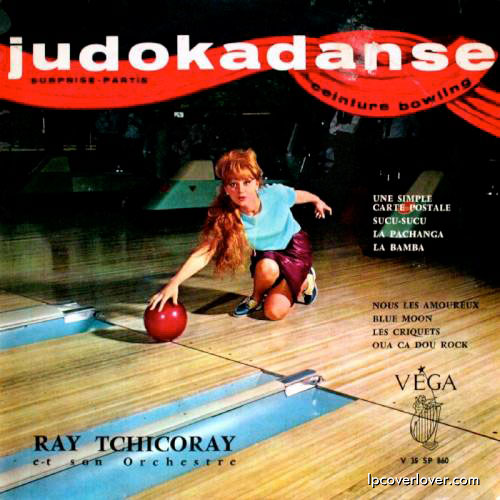
Alley cat

451478961_58f9f59033_o.jpg

1 Star2 Stars3 Stars4 Stars5 Stars (10 votes, average: 4.00 out of 5)
Loading ... Loading ...

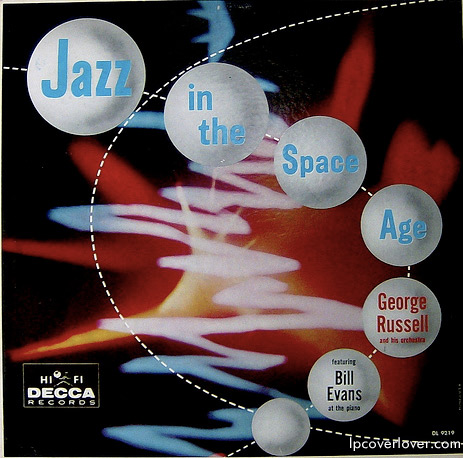
Jazz in the Space Age

560531410_37642cacd7.jpg

“Jazz in the Space Age” (1960) on Decca Records. George Russell and his orchestra featuring Bill Evans at the piano.

George Russell’s third release as a leader combines two adventurous sessions. The first features two pianists, Bill Evans and Paul Bley, and a large ensemble including Ernie Royal, Dave Baker, Walt Levinsky, Barry Galbraith, Milt Hinton and Don Lamond, among others. The three-part suite “Chromatic Universe” is an ambitious work which mixes free improvisation with written passages that have not only stood the test of time but still sound very fresh. “The Lydiot” focuses on the soloists, while incorporating elements from “Chromatic Universe” and other Russell compositions. The second session adds trumpeter Marty Markowitz, valve trombonist Bob Brookmeyer, alto saxophonist, Hal McKusack and drummer Charlie Persip to the earlier group, in the slow, somewhat mysterious “Waltz From Outer Space,” which incorporates an Oriental-sounding theme, and “Dimensions,” described by its composer as “a sequence of freely associated moods indigenous to jazz.”

1 Star2 Stars3 Stars4 Stars5 Stars (15 votes, average: 3.73 out of 5)
Loading ... Loading ...