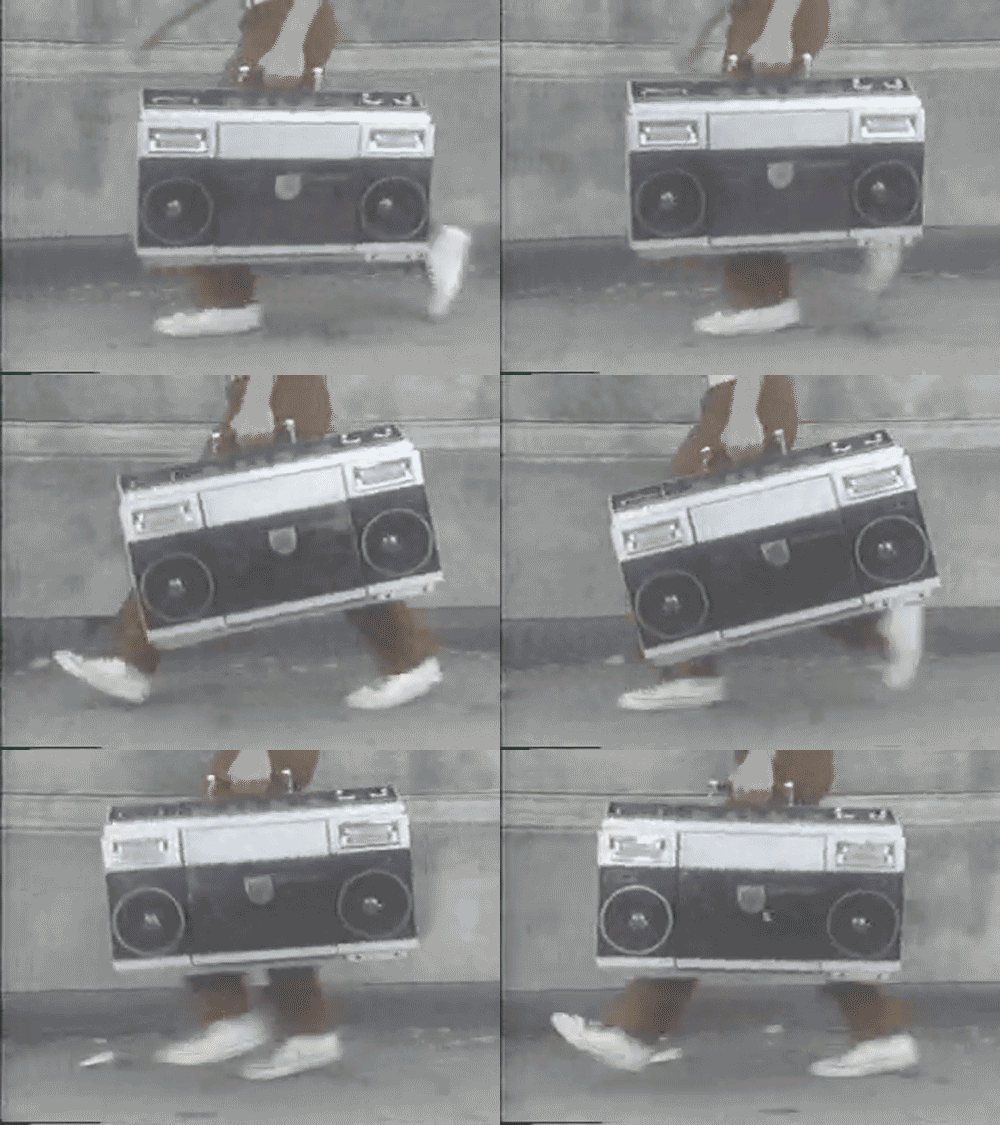
Two by Jack Davis. Courtesy of Uncle Gil. Some more his work here. To any kid who grew up in the Sixties with MAD Magazine (and his many paperback, movie poster, advertising and record cover illustrations), Jack Davis’ charactures and illustrations were just a part of life.
Ernest Tubb Record Shop. Decca Records. Ernest Tubb and his Texas Troubadours.
Early in 1947, he opened the Ernest Tubb Record Shop in Nashville, which he promoted through the Midnight Jamboree, a radio program he designed to fill the post-Opry slot on the radio. Today Midnight Jamboree is still on the air and is the second-longest running US radio program. The store is still open too, 60 years later at:
2416 Music Valley Dr Ste 110
Nashville, TN 37214-1012
Phone: (615) 889-2474
Nothing about this legendary store is shiny or state-of-the-art–it’s strictly “old country.” The staff knows its stuff, too. If you remember a song from decades past, someone here will probably know it, too. The store stays open late on Saturday evenings for the Midnight Jamboree, a live radio show broadcast from the Texas Troubadour Theatre, a 500-seat performance space attached to the Record Shop and across from Opryland.
Produced, written, narrated and sung by Hazlewood. Billy Strange backs the narration with some nice guitar improvisation.
Trouble Is a Lonesome Town was Lee Hazlewood’s first proper solo album, following his prosperous late-’50s partnership with Duane Eddy and prior to his mentoring and making of ’60s boot-walker Nancy Sinatra. Hazlewood considered it a “writer’s album” from which other artists could cull songs, but Trouble is a perfectly legitimate effort in its own right, and characteristically wonderful Hazlewood. The songs are succinct, country-drenched cowboy ballads given a certain undeniable authority by Hazlewood’s warm, bottomless baritone, which booms out of the music like a voice amplified from the heavens. The album runs through jail songs (“Six Feet of Chain”), railroad songs (“The Railroad”), traveling songs (“Long Black Train”), and cold-hearted love songs (“Look at That Woman”) peppered with outlaws, itinerants, dead-end women, card players, and beat-down heroes, too. Between the songs, Hazlewood shows his storyteller’s gift by offering up bits of narration, and the album itself is a storyteller’s record.
Trouble is like a cross between a novel full of idiosyncratic character studies (a la Faulkner) and a John Wayne western, with Hazlewood “†looking a lot like a dharma bum on the album cover, sitting on the railroad tracks with his guitar and a dangling cigarette “†spinning out intricate yarns about all manner of interesting souls with names like Orville Dobkins and Emory Zickfoose Brown, all residents of the hard-scrabbled fictitious town Trouble (“nothing with a railroad running through it”), which is loosely based on his birthplace. The music is as somber and loping as such subject matter demands, mostly consisting of strummed acoustic guitars and woeful harmonica wails that weep the blues. But it is in the purposefully humorous, sympathetic, and colorful storytelling that the distinct, dead-on Americana heart of Trouble lays.
3. You Were Only Fooling (While I Was Falling In Love)
4. Half As Much
5. I Can’t Help It (If I’m Still In Love With You)
6. Lonely Street
Patsy Cline was the greatest female country music star in the world when she died tragically young in an airplane crash in 1963, a year after this — her third lp — was issued.
This is Dorothy Freyberger’s second record. She got her start at the Minnesota State Fair. (I was at the state fair last year! Unfortunately, Dorothy wasn’t performing but you could get a wide range of foods on a stick, pet the livestock and have all the fresh milk you could drink for just one dollar.) Dorothy kicks off this sophmore release with “Big Momma.” Some other tracks of note, “Too Old to Cut the Mustard” and “Big Fat Gal” round out a session of standards.